في هذه الصفحة
There is no established rule that everyone should drink matcha before rather than after a workout. Matcha contains caffeine, so the timing may matter to someone seeking an alert feeling before exercise. Afterward, a matcha drink can fit a meal or snack, but the tea alone should not be treated as a complete recovery product.
The distinction matters because three different questions often get mixed together: whether caffeine can affect exercise performance, whether matcha has been studied during training, and whether your particular drink meets a practical need. Research on one does not automatically answer the others.
Start with the result you want to discuss
Feeling alert is different from performing better
“It gave me energy” might mean feeling more awake, completing more repetitions, running faster or simply enjoying a pre-gym routine. These are different outcomes. A study that measures one should not be described as proving all of them.
Likewise, an easier-feeling session is not the same as greater strength measured over a training program. If you want to judge a claim, ask what the researchers measured and when they measured it. This is especially useful when a headline combines words such as focus, fat burning, endurance and recovery.
Recovery needs a clearer definition
After a workout, recovery might refer to soreness, fatigue, the ability to perform again, rebuilding fuel stores or adaptation over weeks. A change in a laboratory marker is another possible endpoint, with its own interpretation. None can be substituted for the entire recovery process.
Before buying a drink for this purpose, finish the sentence: “I want it to help with…” A specific question makes it easier to see whether you need a preferred beverage, a meal, fluids, rest or individualized sports-nutrition advice.
What human studies of matcha have measured
A small walking study measured short-term fuel use
أ 2018 randomized crossover study involved 13 women completing a 30-minute brisk walk. They consumed three matcha drinks the previous day and another two hours before walking; each contained 1 g of matcha. Fat oxidation during walking averaged 0.35 g/min with matcha versus 0.31 g/min in the control condition. Measures of physiological and perceived exercise intensity did not change.
That is a short-term fuel-use finding. It does not establish long-term fat loss, a faster walking performance or a universal pre-workout serving. The authors themselves cautioned against overstating the finding in weight-loss programs.
A resistance-training paper examined longer-term adaptation
أ 2023 paper reported two small trials in healthy, previously untrained young men: 17 participants over eight weeks and 19 over twelve weeks. Both combined resistance training with twice-daily matcha or placebo drinks. Each matcha drink contained 1.5 g of powder. Importantly, both beverages supplied 45 mg of caffeine per drink.
The first trial found lower reported fatigue at one early measurement, but no statistically significant group-by-training interaction for the strength or body-composition outcomes. A leg-strength difference was described as a tendency. The second trial found a greater change in estimated skeletal muscle mass and lower salivary cortisol with matcha. Body composition was assessed using bioimpedance.
These results warrant further study. Small samples, a specific training program and different outcomes across the two trials prevent a broad promise about recovery or muscle growth. The paper did not directly compare drinking matcha before versus after a workout.
Keep the research endpoint attached to the claim
| Endpoint | Question it addresses | Claim it cannot establish by itself |
|---|---|---|
| Fuel use during a short walk | Which fuels were used during that observation? | Long-term body-fat loss |
| Reported fatigue | How tired did participants say they felt? | Every aspect of physical recovery |
| Strength or body-composition change | What changed during the training period? | The best time of day to drink matcha |
| A blood or saliva marker | Did that measured variable change? | A guaranteed practical benefit for every athlete |
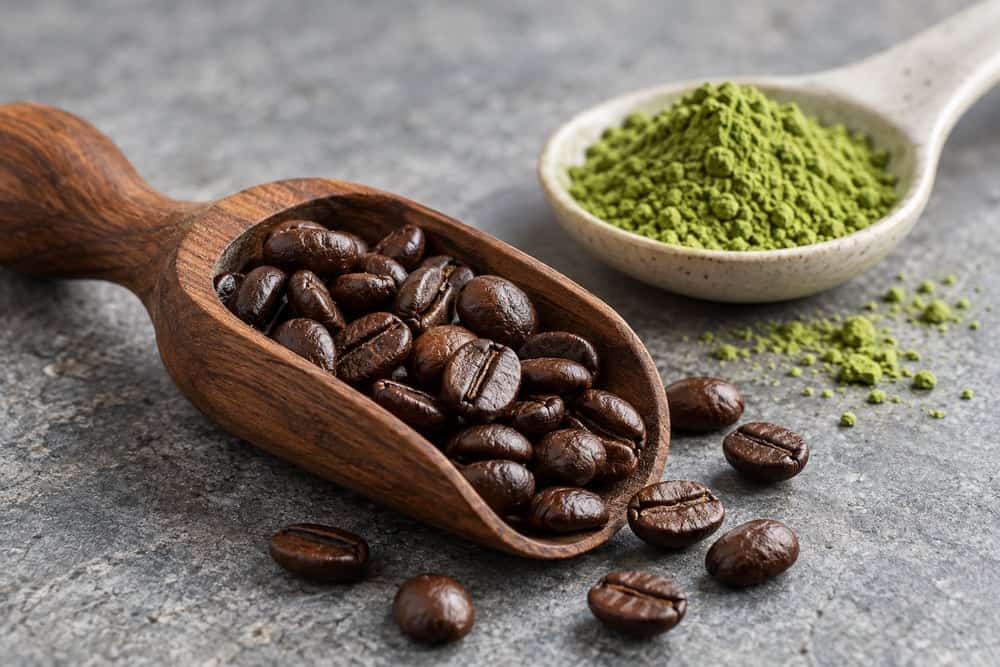
Caffeine research is relevant, but it is not a matcha recipe
يساعدك International Society of Sports Nutrition’s position stand concludes that caffeine can improve several aspects of exercise performance in many, though not all, studies. It also emphasizes variation between people. The literature includes different caffeine sources and protocols, rather than one standardized cup of tea.
Why “drink it exactly one hour before” is too simple
The position stand identifies about 60 minutes before exercise as a common research timing, while explaining that timing depends partly on the caffeine source. A commonly studied schedule is not proof of the optimum schedule for every matcha drink.
Nor should a research caffeine dose be converted casually into scoops of powder. Our دليل الكافيين في الماتشا explains the importance of the product and actual portion. A scoop is a preparation measure, not a standardized caffeine specification.
Theanine does not establish a workout advantage
Matcha’s other compounds are often added to the same performance story. However, a composition result tells you what was measured in a material; it does not establish the effect of a finished drink during exercise. The presence of an ingredient is a starting point for a research question.
دليلنا L-theanine article separates composition and measurement from effect claims. Describing a powder as containing theanine does not establish an ideal before-or-after schedule or show that it cancels caffeine’s unwanted effects.
If you prefer matcha before exercise, check the whole routine
Know what is in the cup
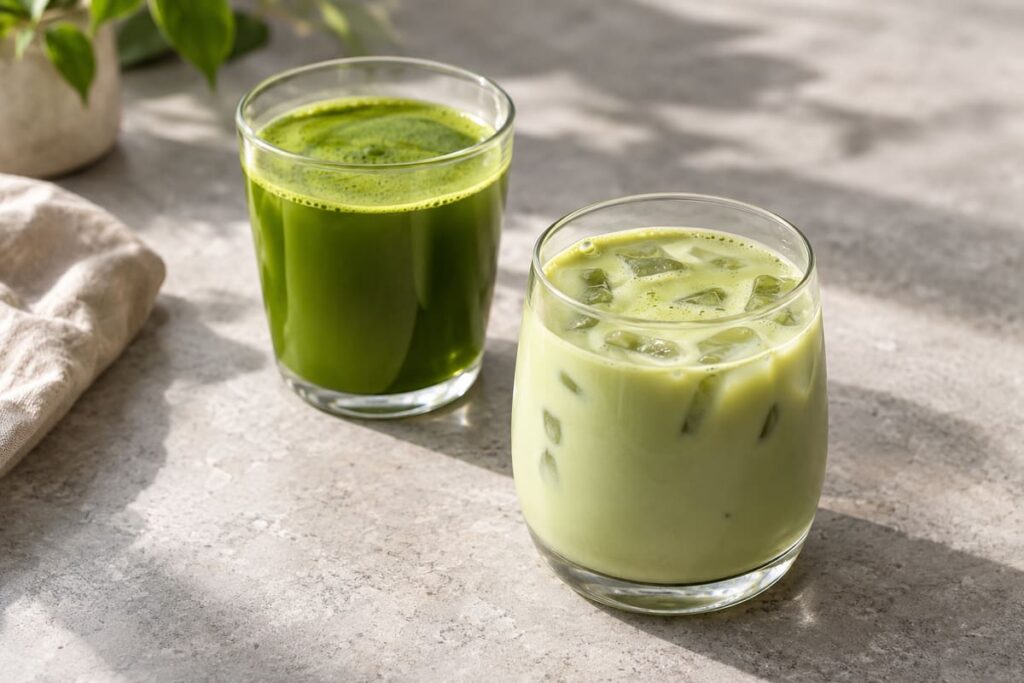
A small water-only matcha, a large milk latte and a sweetened premix are different drinks. Record the product, powder portion and other ingredients before comparing how they fit your routine. A different café size may change the powder amount as well as the liquid.
This is particularly helpful if you are trying to understand an uncomfortable session. Changing the tea, milk, sweetener, meal and training intensity at once leaves several possible explanations. A consistent record can describe what happened without pretending to identify a physiological cause.
Include caffeine from the rest of the day
Matcha does not arrive in an otherwise empty day. Coffee, energy products and pre-workout supplements may already be part of it. The FDA advises considering total caffeine and individual sensitivity; unwanted effects can include sleep disruption, anxiety, a racing heart or digestive symptoms. Medicines and medical conditions can also change the situation.
Feeling stimulated is not a reason to keep increasing the tea portion. If caffeine causes problems, the goal should not be to reproduce a research protocol despite those problems. Ask a healthcare professional when medical circumstances or medications make the choice uncertain.
Keep an important session predictable
A competition, long outing or unusually demanding session is a poor setting for introducing several unfamiliar ingredients. This is a practical planning point, not a claim that one matcha recipe has been validated for competition. Familiarity with a drink’s taste and portion is useful even when no performance benefit is expected.
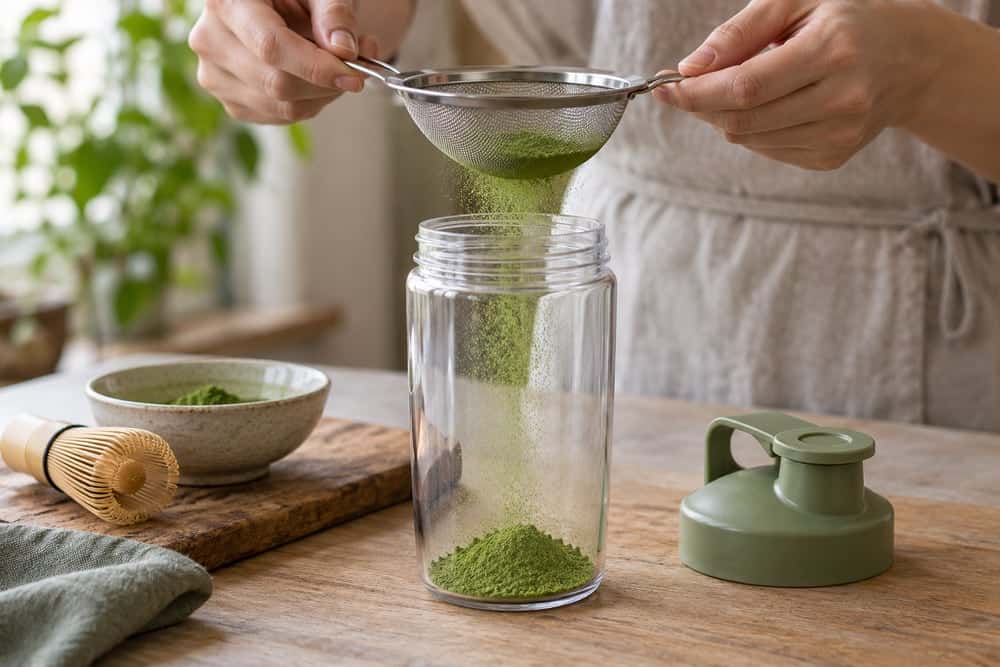
After exercise, assess the meal or snack around the drink
يساعدك NIH Office of Dietary Supplements emphasizes adequate nutrition and fluids as foundations for exercise. Performance supplements cannot substitute for a healthy diet. That is a useful starting point when a green drink is described as an all-in-one recovery solution.
A latte’s nutrition depends on its ingredients
Adding milk or another ingredient changes the finished drink. If you want to know its protein or carbohydrate contribution, use the relevant product information and the amounts actually included. Do not assign the whole drink’s nutrition to a small portion of green powder.
دليلنا للتغذية في الماتشا covers the powder itself. For a post-workout recipe, keep a separate ingredient list and total the complete serving. The right amount for an individual’s training needs is a different question from whether the recipe contains a particular nutrient.
The drink can remain an optional preference
You do not need to give matcha a special recovery role to enjoy it after exercise. It may simply be the flavor you want alongside food. If you dislike caffeine later in the day, moving the drink earlier or choosing something else is also a reasonable preference; the available matcha trials do not make post-workout tea compulsory.
For a demanding training schedule, a sports dietitian can assess the broader eating and drinking plan. That discussion is more useful than asking one cup to provide fuel, fluid, protein and a guaranteed recovery effect simultaneously.
How to read “matcha for fitness” claims
Check the material tested before the headline. Whole matcha, brewed green tea, concentrated green-tea extract and an isolated compound are not interchangeable interventions. A laboratory experiment in cells can suggest a mechanism; it cannot establish what happens when a person drinks a latte before lifting weights.
Then look for a human outcome relevant to your question. A product’s antioxidant measurement, a proposed biochemical pathway and a controlled performance test occupy different places in the evidence. Connecting them requires research, not simply putting them in adjacent sentences.
For a café menu or product brief, describe the drink itself: its ingredients, portion and available nutrition information. Calling it an iced matcha latte gives customers a clearer starting point than calling it a “muscle recovery matcha.” If a customer asks about workout timing, explain the recipe and caffeine information you actually have. Do not turn a published study of another preparation into a performance promise for your own drink.
Questions to ask before adopting a workout-drink claim
| تحقق | What to look for |
|---|---|
| Material | Was it matcha, an extract, isolated caffeine or another preparation? |
| Participants | Do age, training experience and health resemble the intended audience? |
| المقارنة | Was there a control, and were relevant ingredients such as caffeine matched? |
| Outcome | Was the result performance, a subjective rating, body composition or a marker? |
| التوقيت | Did researchers actually compare before and after, or use only one schedule? |
الأسئلة الشائعة
Is matcha better before or after a workout?
Neither timing is established as universally better. Before exercise, caffeine exposure and tolerance are relevant; afterward, look at the complete meal or drink. The matcha studies described here did not directly settle the timing comparison.
Does matcha burn fat during exercise?
A small walking study measured a short-term difference in fat oxidation. That does not establish long-term fat loss or justify a weight-loss promise. Fuel used during one test is a different endpoint from changes in body fat over time.
How many grams of matcha should I take before training?
These studies do not establish a universal workout dose. A powder portion is not a standardized caffeine dose, and research protocols are not personal instructions. Consider the actual product and your circumstances rather than copying a number from a study.
Can a matcha latte replace a post-workout protein drink?
Compare the actual recipes and nutrient information. A latte’s contribution depends on the milk and other ingredients, not its name or color. Matcha powder alone should not be assumed to meet an individual’s recovery nutrition needs.
What about matcha after an evening workout?
Consider your response to caffeine and its effect on sleep. The studies do not require an evening serving, and there is no universal bedtime cutoff established here. Choosing a different drink can be simpler than forcing matcha into a supposed recovery window.