En esta página
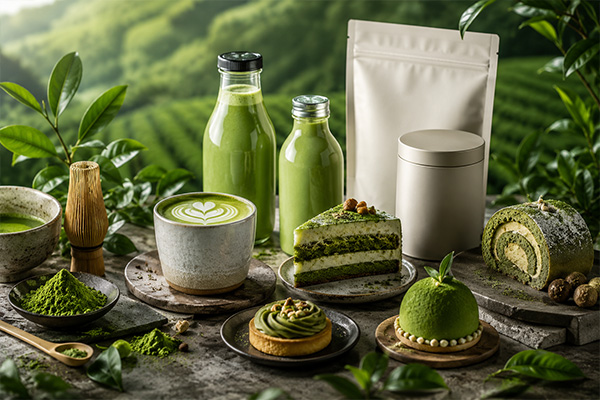
Matcha has become a popular menu item for cafés and coffee shops, especially in matcha lattes, iced matcha drinks, oat milk beverages, smoothies, and seasonal specialty drinks. For café owners and beverage teams, matcha is not just another tea powder. It is a product that affects drink color, taste, preparation speed, customer experience, and repeat sales.
However, choosing matcha for café use is different from choosing matcha for home drinking or food manufacturing. Cafés need matcha that looks good in the cup, blends well with milk, tastes balanced, and stays consistent across daily service.
This guide explains how cafés and coffee shops can choose the right matcha, improve drink preparation, manage packaging and storage, and work with a reliable B2B matcha supplier.
Why Matcha Is a Strong Menu Opportunity for Cafés
For many cafés, matcha creates an opportunity to expand beyond coffee-based drinks. It appeals to customers looking for a green tea beverage, a smoother caffeine option, a premium-looking drink, or a plant-based café menu item.
Matcha can help cafés build:
- A stronger non-coffee drink menu
- More visually attractive beverages
- Premium latte options
- Seasonal drink launches
- Retail matcha product sales
- Café-branded matcha packs
- Higher menu diversity for dairy and plant-based drinks
For coffee shops, matcha is especially useful because it fits naturally into existing workflows. Baristas can use milk steamers, shakers, ice, syrups, and latte preparation methods already used in daily operations.
What Cafés Really Need from Matcha Powder
A café does not need matcha that only looks good in a product photo. It needs matcha that performs well during real service.
Consistent Color in the Cup
Customers often judge matcha drinks visually before tasting them. A good café matcha should create a green color that remains attractive in hot milk, iced milk, oat milk, and blended drinks.
If the powder turns dull or grayish after mixing, the drink may look less appealing even if the taste is acceptable.
Balanced Taste with Milk
Café matcha should have enough flavor strength to stand out in milk, but it should not become overly bitter or harsh.
For milk-based drinks, the best matcha is usually not the softest ceremonial matcha. It should have a balanced profile with enough green tea character, mild bitterness, and a pleasant finish.
Easy Preparation for Baristas
During busy service hours, baristas need matcha that can be prepared quickly and consistently.
Entre los factores importantes se incluyen:
- Smooth powder texture
- Baja formación de grumos
- Easy whisking or shaking
- Stable color
- Clear dosage guidance
- Practical packaging for daily use
Stable Supply for Repeat Orders
If a café builds a drink menu around matcha, consistency matters. A supplier should be able to support repeat orders with similar color, taste, packaging, and documentation.
Best Matcha Grades for Cafés and Coffee Shops
For café applications, the most relevant grades are usually Matcha de grado Latte y Matcha ceremonial. These two grades serve different purposes.
Latte Grade Matcha for Daily Café Drinks
Latte grade matcha is the most practical choice for most cafés. It is designed for milk-based drinks and daily service.
It works well for:
- Latte de matcha caliente
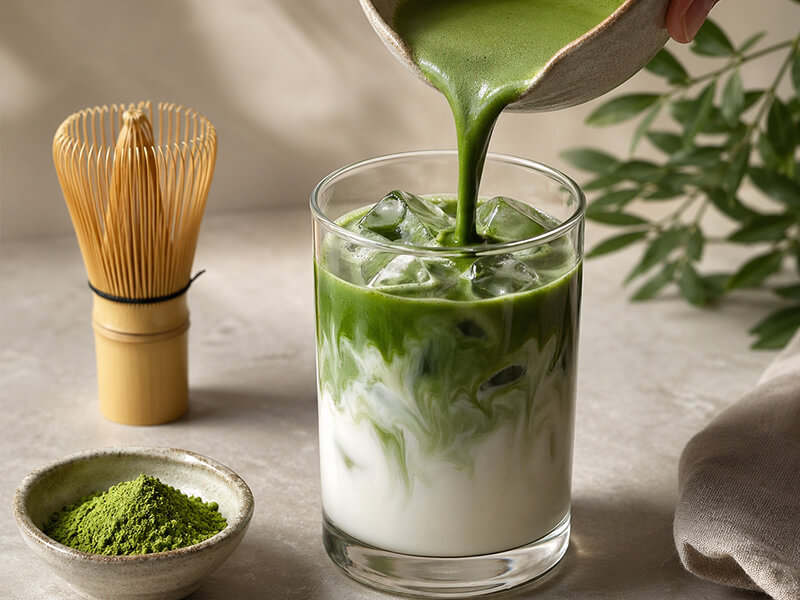
- Latte de matcha helado
- Latte de matcha con leche de avena
- Matcha frappe
- Matcha smoothie
- Limonada de matcha
- Sweetened matcha drinks
- Seasonal café specials
A good latte grade should offer:
- Strong enough matcha flavor for milk
- Good green color after mixing
- Amargor equilibrado
- Practical cost per serving
- Reliable repeat supply
Ceremonial Matcha for Premium Menu Items
Ceremonial matcha can be used for premium drinks or limited menu items where taste, origin story, and presentation matter more.
It works well for:
- Té matcha puro
- Chupitos de matcha de primera calidad
- High-end café tasting menus
- Specialty matcha drinks
- Retail tins or pouches
- Brand-building products
Matcha ceremonial is usually more expensive, so cafés should use it strategically. It may not be necessary for every latte, but it can help create a premium menu tier.
Café Matcha Grade Comparison
| Café Use | Nivel recomendado | Por qué funciona |
|---|---|---|
| Daily matcha latte | Grado Latte | Balanced cost, color, and milk performance |
| Bebidas heladas de matcha | Grado Latte | Stronger flavor and better visibility in cold drinks |
| Latte de matcha con leche de avena | Grado Latte | Combina bien con leche vegetal cremosa |
| Premium matcha tea | Grado Ceremonial | Smooth taste and higher-end presentation |
| Retail matcha packs | Para café con leche o de calidad ceremonial | Depends on brand positioning and customer price point |
| Seasonal specialty drinks | Grado Latte | Flexible for syrups, milk, ice, and toppings |
Practical Matcha Drink Solutions for Cafés
Cafés can use matcha in more ways than a standard hot latte. The right matcha solution depends on the menu, customer profile, preparation workflow, and target price point.
Solution 1: Core Matcha Latte Menu
This is the most important matcha application for most cafés.
A simple café matcha latte system can include:
- One reliable latte-grade matcha
- Standard serving dosage
- Hot and iced preparation methods
- Dairy milk and oat milk testing
- Staff preparation notes
- Storage and resealing guidance
A standard starting point for cafés is often around 2g–3g matcha per drink, depending on cup size, sweetness, milk type, and desired flavor strength.
Solution 2: Iced Matcha Drinks
Iced matcha drinks are visually attractive and popular in warm seasons. However, they can show quality problems more clearly because clumps, sediment, and dull color are more visible.
For iced drinks, cafés should test:
- Whisking matcha with a small amount of warm water first
- Shaking matcha with ice and milk
- Layered iced matcha latte presentation
- Sweetened and unsweetened versions
- Oat milk, almond milk, and dairy milk options
Solution 3: Plant-Based Matcha Menu
Oat milk matcha latte has become a common café option. But plant-based milk can affect color, sweetness, body, and aftertaste.
Cafés should test matcha with:
- Leche de avena
- Almond milk
- Soy milk
- Coconut milk
- Low-fat dairy milk
- Whole milk
The goal is not only taste. The drink should also look good and remain stable during service.
Solution 4: Seasonal Matcha Specials
Matcha can work well in seasonal or limited-time drinks.
Examples include:
- Strawberry iced matcha latte
- Latte de matcha con vainilla
- Coconut matcha cooler
- Limonada de matcha
- Matcha cold foam drink
- Matcha white chocolate latte
- Matcha smoothie with fruit
- Honey matcha latte
These drinks allow cafés to increase menu freshness without changing the core ingredient.
Solution 5: Café-Branded Retail Matcha
Some cafés can sell matcha pouches or tins under their own brand. This creates an extra retail revenue stream and allows loyal customers to prepare matcha at home.
Retail formats may include:
- 50g ceremonial matcha tin
- 100g latte grade pouch
- Kit de iniciación al matcha
- Set de regalo de matcha de temporada
- Café-branded refill pouch
This is especially useful for cafés with strong local branding or online communities.
Matcha Preparation Guide for Café Teams
Even high-quality matcha can perform poorly if preparation is inconsistent. Cafés should create a simple preparation standard for staff.
Basic Café Matcha Latte Workflow
A practical workflow may look like this:
- Measure matcha powder.
- Add a small amount of warm water.
- Whisk or blend until smooth.
- Add steamed milk or cold milk.
- Mix, pour, and serve.
- Keep the matcha bag sealed after use.
Hot Matcha Latte Tips
For hot drinks:
- Do not use boiling water directly on matcha.
- Whisk matcha into a smooth base before adding milk.
- Avoid overheating milk.
- Use a consistent matcha dosage.
- Train baristas to check color and clumps before serving.
Iced Matcha Latte Tips
For iced drinks:
- Dissolve matcha before adding cold milk.
- Use a shaker or small blender for speed.
- Test layering if visual presentation matters.
- Adjust matcha dosage if using sweet syrups.
- Check sediment after several minutes.
Suggested Starting Ratios
| Tipo de bebida | Matcha en polvo | Liquid Base | Notas |
|---|---|---|---|
| Small hot latte | 2g | 180–220ml milk | Good for mild daily drinks |
| Regular hot latte | 2.5g–3g | 240–300ml milk | Stronger café flavor |
| Latte de matcha helado | 3 g | 250–350ml milk + ice | Needs stronger taste after dilution |
| Latte de matcha con leche de avena | 2.5g–3g | 240–300ml oat milk | Test sweetness and body |
| Chupito de matcha de primera calidad | 1.5g–2g | 60–80ml water | Better with ceremonial grade |
These are only starting points. Each café should adjust based on cup size, milk type, sweetness level, and target customer preference.
How to Keep Matcha Quality Stable in Daily Café Use
Matcha is sensitive to air, light, heat, moisture, and odor. Café storage conditions can strongly affect color and aroma after opening.
Back-of-House Storage Tips
Cafés should:
- Keep matcha sealed after opening
- Store away from steam, heat, and sunlight
- Avoid placing matcha near coffee beans or strong odors
- Use clean, dry scoops
- Do not leave bags open during service
- Rotate stock based on opening date
- Avoid transferring powder into transparent containers unless they are used quickly
Why Packaging Matters for Cafés
For café use, packaging should be practical and protective.
Useful packaging options include:
- 500g foil bags
- Bolsas de aluminio de 1 kg
- Resealable foodservice pouches
- Carton-packed bulk bags for multi-store cafés
For high-volume cafés, 1kg packaging can be more efficient. For smaller cafés, smaller bags may help protect freshness after opening.
How Cafés Can Calculate Matcha Usage and Reorder Timing
A café should understand monthly matcha usage before buying in bulk. This helps prevent over-ordering, stockouts, or freshness problems.
Fórmula de consumo mensual
Consumo mensual de matcha = Cantidad de matcha por bebida × Bebidas vendidas al día × Días de actividad al mes
Ejemplo
If a café uses 3g per drink, sells 50 matcha drinks per day, and operates 26 days per month:
3g × 50 × 26 = 3,900g per month
That means the café uses about 3.9kg of matcha per month.
Usage Planning Table
| Drinks Sold Per Day | Matcha por bebida | Consumo mensual, 26 días |
|---|---|---|
| 20 bebidas | 3 g | 1,56 kg |
| 50 bebidas | 3 g | 3,9 kg |
| 100 bebidas | 3 g | 7,8 kg |
| 200 bebidas | 3 g | 15,6 kg |
This helps cafés decide whether to order small foodservice packs, 1kg bags, or larger wholesale quantities.
Café Case Examples
Case 1: Specialty Café Adding Matcha Lattes
A specialty café wanted to add matcha lattes without making the menu too complicated. The main concern was finding a matcha that looked bright in milk and did not taste too bitter.
The solution was to test two latte-grade matcha samples in hot milk, iced milk, and oat milk. After testing, the café selected the grade with stronger milk performance instead of the smoothest drinking-grade sample.
The result was a simple menu launch with:
- Latte de matcha caliente
- Latte de matcha helado
- Latte de matcha con leche de avena
- Latte de matcha con vainilla
This allowed the café to add a new drink category without changing the core workflow.
Case 2: Coffee Shop Chain Standardizing Matcha Across Stores
A small coffee shop chain needed matcha that could be prepared consistently by different baristas across several locations.
The solution focused on:
- One standard latte-grade matcha
- Envase de 1 kg para el sector de la restauración
- Clear drink dosage
- Staff preparation instructions
- Planificación de pedidos recurrentes
- Batch consistency review
Instead of giving each store a different preparation method, the chain used one standard recipe and one approved matcha grade. This helped reduce customer complaints and keep drink appearance consistent.
Case 3: Café Launching a Retail Matcha Pouch
A café with loyal local customers wanted to sell matcha for home preparation. Instead of launching several products, it started with one 100g pouch using a café-friendly latte grade.
The product was positioned for customers who already liked the café’s iced matcha latte. The supplier helped with grade selection, packaging size, label information, and sample testing.
This created a simple retail extension from the café drink menu.
What to Ask Before Choosing Matcha for Your Café
Before ordering café matcha, ask these questions:
| Área | Preguntas que hay que hacer |
|---|---|
| Grado | Is this matcha suitable for hot and iced lattes? |
| Rendimiento lechero | Does it work with dairy and oat milk? |
| Sabor | Is the bitterness acceptable for daily café drinks? |
| Color | Does it stay green after mixing with milk? |
| Textura | Does it clump easily during preparation? |
| Posología | How many grams are recommended per drink? |
| Embalaje | Is the bag convenient for café service? |
| Almacenamiento | How should it be stored after opening? |
| Suministro | Can the same grade be supplied repeatedly? |
| Retail option | Can we create café-branded pouches or tins? |
Common Mistakes Cafés Should Avoid
Mistake 1: Choosing Ceremonial Matcha for Every Drink
Ceremonial matcha is excellent for premium drinking, but it may not be the most cost-effective option for everyday lattes. Latte grade is usually more practical for café menus.
Mistake 2: Testing Matcha Only with Water
Cafés should test matcha in milk and plant-based milk. A sample that tastes smooth in water may become weak or dull in milk.
Mistake 3: Ignoring Barista Workflow
If preparation is too slow or inconsistent, the drink may not work during busy hours. Café matcha should fit real service conditions.
Mistake 4: Using Poor Storage Practices
Leaving matcha exposed to air, heat, or steam can reduce quality quickly. Packaging and storage rules should be part of staff training.
Mistake 5: Not Calculating Cost Per Drink
Cafés should calculate cost per serving instead of only comparing price per kilogram. A slightly higher-quality matcha may create a better drink and stronger customer loyalty.
How MatchaOEMFactory Supports Cafés and Coffee Shops
MatchaOEMFactory provides practical matcha solutions for cafés, coffee shops, beverage chains, and foodservice buyers.
We help café customers with:
- Matcha apto para café con leche, ideal para las bebidas diarias de la cafetería
- Matcha ceremonial para platos de la carta de alta gama
- Sample testing for hot lattes, iced drinks, and oat milk drinks
- Opciones de envase aptas para cafeterías de 500 g y 1 kg
- Suministro de matcha a granel y al por mayor
- Grade comparison based on drink application
- Asistencia en materia de COA y especificaciones
- Planificación de pedidos recurrentes para garantizar un suministro estable
- Private label pouch and tin options for café retail products
- Custom matcha solutions for seasonal or branded drinks
Our goal is not only to supply matcha en polvo, but to help cafés choose a matcha that works in real drinks, real service conditions, and real customer-facing menus.
Preguntas frecuentes
What matcha grade is best for café lattes?
Latte grade matcha is usually the best choice for daily café lattes because it balances color, milk performance, taste, and cost.
Should cafés use ceremonial matcha?
Yes, but usually for premium drinks, straight matcha tea, specialty menu items, or retail products. It may not be necessary for every daily latte.
How much matcha should a café use per drink?
Many cafés start with around 2g–3g per drink, depending on cup size, milk type, sweetness, and desired flavor strength.
Can matcha work with oat milk?
Yes. Oat milk matcha lattes are popular, but cafés should test the matcha with their actual oat milk brand to confirm color, sweetness, and texture.
What packaging is best for cafés?
500g or 1kg resealable foil bags are practical for many cafés. Larger bulk packaging may be suitable for chains or high-volume stores.
¿Pueden las cafeterías vender matcha de marca propia?
Yes. Cafés can sell branded matcha pouches, tins, or starter kits as retail products, especially if they already have strong customer demand for matcha drinks.
Ready to Build a Better Matcha Menu for Your Café?
A successful café matcha menu starts with the right grade, stable color, balanced taste, practical packaging, and reliable supply.
MatchaOEMFactory helps cafés and coffee shops test matcha samples, compare latte and ceremonial grades, plan café-friendly packaging, and create private label matcha products for retail sales.
Share your drink menu, target customer, expected monthly usage, and packaging needs. Our team can recommend suitable matcha options and prepare a tailored quotation for your café.