On This Page
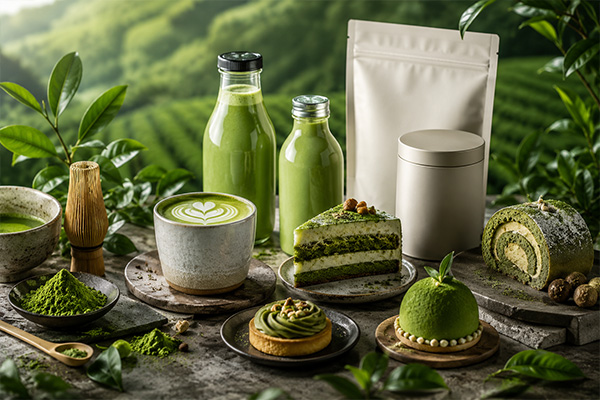
Matcha is no longer limited to traditional tea or café lattes. For food and beverage brands, it has become a versatile ingredient for product development, helping brands create visually distinctive, plant-based, clean-label, and premium green products.
From ready-to-drink beverages and powdered drink mixes to bakery, desserts, chocolate, ice cream, snacks, and wellness products, matcha can support a wide range of commercial applications. However, using matcha in food and beverage products requires more than choosing a bright green powder. Brands need to consider grade, taste, color stability, processing conditions, packaging, cost, documentation, and large-scale supply.
This guide explains how food and beverage brands can use matcha powder in product development and how to choose the right matcha solution for different commercial applications.
Why Food and Beverage Brands Use Matcha
Matcha gives brands a unique combination of visual appeal, flavor character, and product positioning. Its natural green color and distinctive tea taste make it useful for both mainstream and premium product lines.
For food and beverage brands, matcha can help create:
- Premium green tea beverages
- Plant-based drink concepts
- Clean-label food products
- Functional beverage ideas
- Dessert and bakery innovations
- Asian-inspired product lines
- Limited-edition seasonal products
- Retail products with strong visual identity
Unlike many flavor ingredients, matcha contributes both taste and color. This makes it especially useful for brands that want a product to look different on the shelf, in a cup, or on social media.
Matcha Is an Ingredient, Not Just a Flavor
Many brands first think of matcha as a flavor. But in commercial product development, matcha should be treated as a functional ingredient with specific performance requirements.
Matcha affects:
| Product Factor | Why It Matters |
|---|---|
| Color | Creates green visual identity and shelf appeal |
| Taste | Adds green tea, umami, grassy, or slightly bitter notes |
| Texture | Powder fineness affects mouthfeel and dispersion |
| Formula balance | Works differently with milk, sugar, fat, acids, and flavors |
| Cost | Grade choice affects cost per serving or unit |
| Processing | Heat, mixing, and storage may affect color and flavor |
| Labeling | Ingredient statement, origin, certification, and claims matter |
| Supply | Batch consistency is important for repeat production |
For this reason, food and beverage brands should evaluate matcha based on final product performance, not only dry powder appearance.
Common Applications for Food and Beverage Brands
Matcha can be used in many product categories. Each application has different technical and commercial requirements.
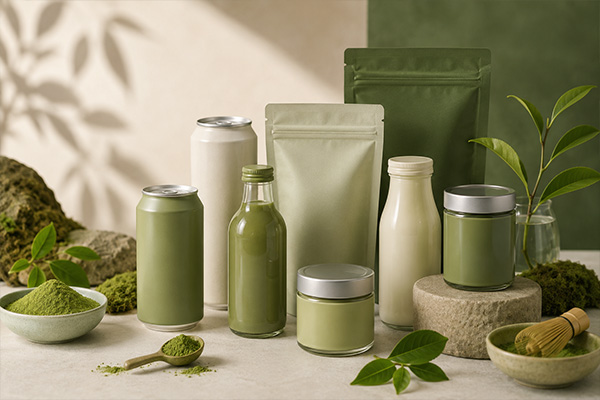
Ready-to-Drink Beverages
RTD matcha drinks are convenient for consumers but more complex for brands. The formula must consider taste, color, suspension, sediment, sweetness, milk base, acidity, shelf life, and processing conditions.
Common RTD concepts include:
- Matcha latte
- Matcha oat milk drink
- Matcha coconut drink
- Matcha lemonade
- Matcha sparkling drink
- Matcha protein beverage
- Matcha functional drink
For RTD products, brands should test whether matcha color and flavor remain stable after processing and storage.
Powdered Drink Mixes
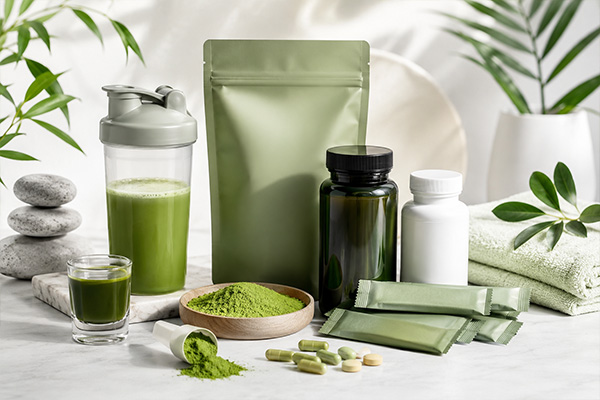
Powdered matcha drink mixes are suitable for retail, e-commerce, wellness brands, and foodservice products.
Common formats include:
- Matcha latte powder
- Matcha milk tea powder
- Matcha smoothie powder
- Matcha protein blend
- Matcha superfood blend
- Single-serve sachets
- Stick packs
For powder blends, brands need to check flowability, mixing performance, flavor balance, and moisture control.
Bakery and Desserts
Matcha works well in bakery and dessert applications because it brings color and tea flavor to sweet products.
Common applications include:
- Cookies
- Cakes
- Bread
- Pastries
- Mochi
- Puddings
- Cream fillings
- Dessert cups
- Cheesecake
- Tiramisu-style desserts
For bakery use, brands should test color and flavor after heat processing.
Ice Cream and Dairy Products
Matcha is popular in ice cream, yogurt, milk drinks, and cream-based desserts.
Important factors include:
- Color in dairy base
- Bitterness after freezing
- Taste balance with sugar and fat
- Smooth texture
- Powder dispersion
- Batch consistency
A matcha that tastes strong in water may become softer in dairy products, so application testing is essential.
Chocolate and Confectionery
Matcha can be used in chocolate, coated snacks, candy, and confectionery fillings.
Important factors include:
- Compatibility with fat
- Color visibility
- Taste balance with sweetness
- Fine texture
- Stability in processing
Brands should choose matcha that can stand out without creating excessive bitterness.
Choosing the Right Matcha Grade by Application
For food and beverage brands, the right grade depends on the product format and target price point.
Latte Grade Matcha
Latte grade matcha is suitable for milk-based beverages and drink mixes.
Best for:
- Matcha latte drinks
- Oat milk matcha beverages
- Café-style drink mixes
- RTD milk tea concepts
- Smoothies and blended drinks
It usually offers a good balance of color, taste, milk performance, and cost.
Culinary Grade Matcha
Culinary grade matcha is often suitable for bakery, desserts, ice cream, chocolate, and food processing.
Best for:
- Cookies
- Cakes
- Pastries
- Dessert fillings
- Ice cream
- Chocolate
- Snack products
It should have enough flavor strength and color performance for food applications.
Ceremonial Grade Matcha
Ceremonial grade is usually used for premium drinking or high-end retail products. For food and beverage manufacturing, it may be used only when the brand wants a premium positioning and the formula allows higher ingredient cost.
Best for:
- Premium bottled matcha
- High-end powdered matcha products
- Premium tea product lines
- Luxury retail concepts
Organic Matcha
Organic matcha can be used when the product targets organic, natural, premium, or clean-label channels.
Best for:
- Organic retail products
- Organic beverage brands
- Natural food products
- Wellness product lines
- Premium private label brands
Organic matcha may have higher cost and more document requirements, so it should be planned early.
Application-Based Matcha Selection Table
| Product Type | Recommended Matcha Direction | Key Evaluation Points |
|---|---|---|
| RTD matcha latte | Latte grade | Milk performance, color, sediment, taste |
| Oat milk matcha drink | Latte grade | Plant milk compatibility, color, sweetness balance |
| Matcha powder mix | Latte or culinary grade | Flowability, taste, blending, moisture |
| Bakery products | Culinary grade | Heat stability, flavor strength, cost |
| Ice cream | Culinary or latte grade | Dairy compatibility, bitterness, color |
| Chocolate | Culinary grade | Fat compatibility, fine texture, flavor balance |
| Premium retail drink | Ceremonial or latte grade | Smoothness, color, brand positioning |
| Organic food product | Organic matcha | Certification, traceability, documents |
This table should be used as a starting point. Final grade selection should always be confirmed through samples and application testing.
How Matcha Performs in Different Formula Systems
Matcha does not behave the same way in every product. A powder that works well in one formula may not perform the same in another.
In Milk-Based Products
Milk softens matcha’s bitterness and creates a creamy taste. However, it can also reduce the visibility of green color. Brands should test matcha in the actual milk base, including dairy or plant-based milk.
In Sweet Products
Sugar can balance bitterness and make matcha more approachable. This works well in bakery, desserts, ice cream, and sweet drinks.
In High-Fat Products
Chocolate, cream, and dairy fat can affect matcha dispersion and flavor release. Finer matcha may perform better in these applications.
In Acidic Beverages
Acidic systems such as lemonade or fruit drinks may affect matcha color and taste. These products require careful testing before scale-up.
In Dry Powder Blends
When matcha is used in powder mixes, moisture control, particle size, flowability, and flavor masking become important. Packaging should protect the blend from humidity and oxidation.
Product Development Process for Matcha-Based Products
Food and beverage brands should follow a structured development process before bulk purchasing.
Step 1: Define the Product Concept
Start with a clear product idea.
Is this a drink, powder mix, bakery product, dessert, snack, or supplement-style product?
Who is the target consumer?
What is the target price point?
Will the product be conventional, organic, premium, or clean-label?
What packaging format will be used?
Step 2: Choose 2–3 Matcha Samples
Do not test only one option. Compare different grades based on:
- Color
- Aroma
- Taste
- Fineness
- Cost
- Application performance
- Document availability
Step 3: Test in the Real Formula
Matcha should be tested in the actual formula, not only in water.
For example:
- RTD brands should test processing and shelf stability.
- Bakery brands should test after baking.
- Ice cream brands should test after freezing.
- Chocolate brands should test after mixing with fat.
- Powder brands should test blending and reconstitution.
Step 4: Review Cost per Finished Unit
Instead of only comparing price per kilogram, calculate cost per bottle, pouch, serving, cookie, scoop, or finished product.
Step 5: Confirm Documents and Supply
Before moving to production, confirm:
- COA
- Product specification
- Shelf life
- Storage conditions
- Organic certificate if needed
- Packaging specification
- Repeat supply plan
Step 6: Scale from Pilot to Bulk
Once the formula is approved, test whether the matcha performs consistently at production scale. Mixing time, processing temperature, packaging, and storage may change the result.
Matcha Product Ideas for Food and Beverage Brands
Here are practical product ideas brands can develop using matcha.
| Category | Product Ideas |
|---|---|
| RTD Beverages | Matcha latte, oat milk matcha, coconut matcha, matcha lemonade |
| Powder Mixes | Matcha latte powder, matcha smoothie mix, matcha protein blend |
| Bakery | Matcha cookies, cakes, croissants, muffins, bread |
| Desserts | Matcha pudding, cheesecake, tiramisu, mousse, dessert cups |
| Ice Cream | Matcha ice cream, matcha gelato, matcha frozen yogurt |
| Snacks | Matcha coated nuts, matcha cereal snacks, matcha wafers |
| Chocolate | Matcha white chocolate, matcha truffles, matcha filling |
| Wellness Products | Matcha superfood blend, matcha sachets, matcha energy drink mix |
Brands do not need to launch many products at once. A stronger approach is to start with one clear product concept, test market response, and expand into a product line later.
Case Example 1: Beverage Brand Developing an Oat Milk Matcha Drink
A beverage startup wanted to create a ready-to-drink oat milk matcha latte. The brand needed a matcha that could provide good color, mild bitterness, and enough tea flavor after being mixed with oat milk.
During testing, the team compared several matcha grades. One sample looked bright in dry powder but became weak in oat milk. Another had stronger taste but too much bitterness. The selected option was a latte-grade matcha with better balance in the actual formula.
The final development process focused on:
- Oat milk compatibility
- Sweetness level
- Matcha dosage per bottle
- Color after mixing
- Sediment after storage
- Cost per finished unit
This example shows why brands should test matcha in the real product system before ordering in bulk.
Case Example 2: Bakery Brand Adding Matcha Products
A bakery brand wanted to develop matcha cookies and cakes. The first sample was smooth and bright in water, but after baking, the flavor became weak and the color was less visible.
The solution was to test culinary-grade matcha options with stronger flavor and better performance in baked products.
The bakery then developed:
- Matcha cookies
- Matcha cream filling
- Matcha cake roll
- Matcha seasonal pastry
The brand used one suitable matcha grade across multiple bakery products, helping simplify purchasing and control cost.
Case Example 3: Private Label Brand Building a Matcha Powder Mix
A private label brand planned to launch a matcha latte powder for e-commerce. The product needed to be easy to prepare, visually attractive, and suitable for daily home use.
The development process included:
- Selecting a matcha grade for milk-based drinks
- Testing sweetness and flavor balance
- Checking powder blending performance
- Choosing pouch packaging
- Preparing label information
- Reviewing COA and specifications
The brand started with one core product instead of multiple flavors. After collecting customer feedback, it planned future versions with vanilla and coconut.
Common Mistakes Food and Beverage Brands Should Avoid
Mistake 1: Choosing Matcha Only by Dry Powder Color
Dry powder color is important, but the final product matters more. Always test color after mixing, baking, freezing, or processing.
Mistake 2: Using One Matcha for Every Product
A matcha that works well in lattes may not be the best choice for cookies, ice cream, or RTD beverages.
Mistake 3: Ignoring Processing Conditions
Heat, acidity, fat, freezing, and long storage can affect matcha performance.
Mistake 4: Not Calculating Cost per Finished Unit
The price per kilogram is only part of the decision. Brands should calculate matcha cost per bottle, pouch, serving, or product unit.
Mistake 5: Skipping Document Review
Commercial products need COA, specification, shelf life, storage, and sometimes organic or other certificates.
Mistake 6: Launching Too Many SKUs Too Early
It is usually better to develop one strong product first, then expand into flavors or product lines after market validation.
Matcha Development Checklist for Food and Beverage Brands
| Area | What to Confirm |
|---|---|
| Product concept | Beverage, bakery, dessert, powder, snack, or wellness product |
| Target market | Retail, foodservice, e-commerce, organic, premium, mass market |
| Matcha grade | Latte, culinary, ceremonial, or organic |
| Application testing | Milk, heat, freezing, acidity, fat, powder blend, or storage |
| Color | Appearance in final product, not only dry powder |
| Taste | Balance with sugar, milk, fat, fruit, or other ingredients |
| Texture | Fineness, mouthfeel, sediment, blending |
| Cost | Cost per finished unit or serving |
| Packaging | Bulk bag, pouch, bottle, sachet, carton, or retail pack |
| Documents | COA, specification, shelf life, certificate if needed |
| Supply | MOQ, lead time, repeat orders, batch consistency |
How MatchaOEMFactory Supports Food and Beverage Brands
MatchaOEMFactory helps food and beverage brands source matcha for product development, bulk production, and private label projects.
We support brands with:
- Matcha grade recommendations by application
- Latte, culinary, ceremonial, and organic matcha options
- Bulk matcha samples for formula testing
- Matcha solutions for RTD drinks, powder mixes, bakery, desserts, ice cream, chocolate, and wellness products
- Custom matcha blending support
- Private label packaging options
- COA and specification support
- MOQ and cost planning
- Repeat-order supply support
- Export-ready documentation
Our team can help you choose matcha based on real product performance, not only powder appearance. Whether you are developing a matcha drink, bakery product, dessert, powder blend, or private label product line, we can recommend suitable options and support your sourcing process.
FAQ
What matcha grade is best for food and beverage brands?
It depends on the product. Latte grade is often suitable for milk-based beverages, culinary grade for bakery and desserts, ceremonial grade for premium products, and organic matcha for organic or clean-label positioning.
Can the same matcha be used for drinks and bakery products?
Sometimes, but not always. Drinks, bakery, ice cream, chocolate, and powder blends have different processing conditions, so application testing is important.
How should food brands test matcha before bulk ordering?
Brands should test matcha in the real formula and process, such as milk mixing, baking, freezing, blending, or shelf-life testing.
Does matcha color change during processing?
It can. Heat, acidity, fat, light, oxygen, and storage conditions may affect matcha color, so brands should test the final product under realistic conditions.
Can MatchaOEMFactory support private label matcha products?
Yes. We support private label matcha pouches, tins, sachets, blends, and custom product development for food and beverage brands.
What documents should B2B buyers request?
Common documents include COA, specification sheet, shelf life statement, storage instructions, packaging information, and organic certificate if applicable.
Ready to Develop Matcha Products for Your Brand?
Matcha can help food and beverage brands create distinctive products with strong color, recognizable taste, and premium market appeal.
MatchaOEMFactory supports B2B brands with application-based grade selection, sample testing, custom matcha solutions, private label packaging, and export-ready documentation.
Share your product concept, target market, expected quantity, and packaging needs. Our team can help you compare matcha grades, arrange samples, and prepare a tailored quotation for your project.