
Matcha Product Direction
Premium drinking, café, culinary, ingredient, organic, flavored, and hojicha products have different cost structures.
Compare wholesale matcha quotes on the same specification, order quantity and delivered-cost basis.
Request the powder price and any packaging, filling, testing and freight charges separately. A lower per-kg figure may exclude work or delivery costs that another quote includes.
A useful comparison separates product cost from packaging, testing, logistics, and commercial terms.
Premium drinking, café, culinary, ingredient, organic, flavored, and hojicha products have different cost structures.
Larger repeat volumes can improve production, packing, freight, and inventory efficiency.
Bulk foil bags, tins, pouches, sachets, printed cartons, and custom components add different costs.
Third-party residue, heavy metal, microbiological, or market-specific testing may be quoted separately.
Certified product routes should be verified by product, operator, transaction, and destination market.
Courier, air, sea, customs route, insurance, and delivery term affect the landed cost.
These are buying priorities rather than fixed public prices. A final quotation requires a defined product and supply route.
| Application | Primary Price Driver | Buyer Trade-Off | Best Quote Brief |
|---|---|---|---|
| Premium tea and retail | Sensory profile and product position | Higher sensory target versus retail margin | Preparation method, market position, pack format |
| Cafés and beverage chains | Milk performance and cost per serving | Tea intensity versus dosage | Milk base, cup size, dosage, monthly usage |
| Food manufacturing | Processed color and flavor at practical dosage | Performance versus production cost | Recipe, process, dosage, annual demand |
| Ingredient and blends | Specification, testing, and scale | Technical requirements versus unit cost | Specification limits, pack size, demand forecast |
A clear brief reduces unsuitable samples and prevents price comparisons based on different products or terms.
Latte, bakery, premix, supplement, retail powder, or other product.
Country, certification expectations, and import requirements.
Trial order, monthly usage, annual forecast, or repeat-order target.
Bulk bag, foodservice pack, pouch, tin, sachet, or supplied component.
Premium, mainstream, entry, or a defined target cost.
Pickup, port shipment, courier, air, sea, or delivered route.
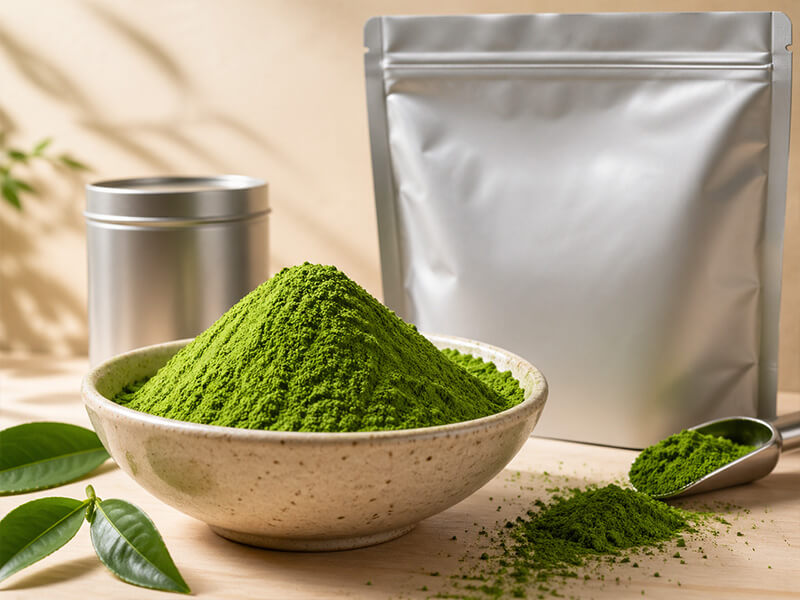
The lowest product price may not produce the lowest finished-product or landed cost.
Calculate dosage, waste, and finished-product performance rather than only price per kilogram.
Compare unit packing, carton volume, repacking labor, damage risk, and inventory handling.
Include required testing, document review, sample rounds, and approval time.
Compare freight, customs route, insurance, local handling, and delivery terms on the same basis.
A quote becomes more useful as the product, quality scope, packaging, and logistics become clearer.
Application, market, quantity, target cost, packing, and delivery basis.
Evaluate product performance before comparing unlike price positions.
Approve specifications, testing, certification, pack format, and artwork needs.
Review unit price, MOQ, lead time, Incoterm, freight basis, and validity.
Representative examples—not customer testimonials—show why price requests need different information.
Compare dosage and milk performance to identify the practical cost per serving.
Balance processed color and flavor against dosage, annual volume, and packaging.
Combine formula, printed packaging, testing, MOQ, freight, and launch quantity.
Provide one written brief to each supplier and reconcile the following fields before deciding which offer fits the order.
| Decision | What to Define | Approval or Quote Check |
|---|---|---|
| Powder price | Same application, specification and net kg | Confirm grade or product code, pure powder versus blend, and the quoted quantity tier. |
| Conversion costs | Same pack size, filling and artwork scope | Identify material cost, print setup, packing run minimums and unused-component handling. |
| Quality costs | Same tests, documents and batch coverage | State which reports are included and which additional tests require a separate quote. |
| Delivered cost | Same shipping term and named destination | Separate freight, insurance, destination handling and any duties or taxes outside the offer. |
Prices are project-specific and should be compared on the same product, scope, and delivery basis.
No. Confirm the ingredient composition and the intended serving weight of each product. Use price per kg multiplied by the approved grams per serving, divided by 1,000, then add ingredients that are not already included. A lower kg price for a sweetened mix does not establish a lower cost for the same finished drink.
Multiply the powder price per kg by the approved grams per serving, then divide by 1,000. Add other ingredients, packaging, waste and preparation costs when evaluating the finished product; this calculation is a planning method, not a supplier price promise.
The approved grade, formula, quantity, pack format, requested tests or freight route may differ from the initial brief. Ask the quote to state its validity, included items and assumptions, then approve any changes before ordering.
Different products may target different sensory profiles, applications, specifications, certifications, origins, packing formats, order volumes, and delivery terms.
A reference range may be discussed for defined products, but a reliable quotation requires quantity, packaging, quality scope, destination, and Incoterm.
Larger repeat volumes may improve production, packing, and freight efficiency, but the result depends on the confirmed product and commercial route.
Standard documents and project-specific testing should be confirmed separately. Third-party testing, transaction certificates, or special market requirements may add cost.
Quote validity depends on raw material conditions, packaging, freight, exchange-rate exposure, and project scope. The validity period should be stated on the quotation.
Share the product application, destination, quantity, target cost, packaging, testing, and shipping basis for a more accurate quotation.