
Export Planning & Delivery Coordination
International Matcha Shipping and Logistics
We help B2B buyers align the shipping term, freight mode, export documents, packing plan, and delivery handoff before a matcha order moves into production.
Every route is reviewed by destination, order size, product format, importer requirements, timing, and the buyer’s logistics capability. Final availability and responsibilities are confirmed in the quotation and sales agreement.
Shipment Planning BoardChina → Global Markets
01Order ProfileProduct, pack, volume
02Freight ModeCourier, air, or sea
03Delivery PointPort, airport, or door
*Available terms and routes depend on the product, destination, shipment size, and project feasibility.
Delivery Terms
Compare Common Shipping Terms Before Quotation
Incoterms help define cost allocation, transport responsibilities, customs obligations, and risk transfer. This overview is a commercial starting point; the named place, transport mode, and final responsibilities must be written into the quotation and contract.
EXWBuyer-Controlled Pickup
Ex Works
For buyers using their own forwarder and collection plan. Pickup, export arrangements, main freight, import clearance, and final delivery responsibilities must be confirmed with the appointed logistics provider.
FOBSea Freight Control
Free on Board
For sea freight projects where the seller handles export clearance and delivery on board at the named port. The buyer manages main freight, insurance, destination charges, import clearance, and onward delivery.
CIFPort-to-Port Support
Cost, Insurance & Freight
For sea freight projects where cost, freight, and minimum insurance are arranged to the named destination port. Risk transfer and destination charges still need to be reviewed carefully.
DDPSelected Routes Only
Delivered Duty Paid
For selected destinations where a managed door-to-door route is commercially and legally feasible. Importer-of-record, duty, tax, product, and destination restrictions are checked before quotation.
Important:FOB and CIF are intended for sea or inland-waterway transport. DDP is not available for every destination, and import rules may require the buyer or a local entity to act as importer of record.
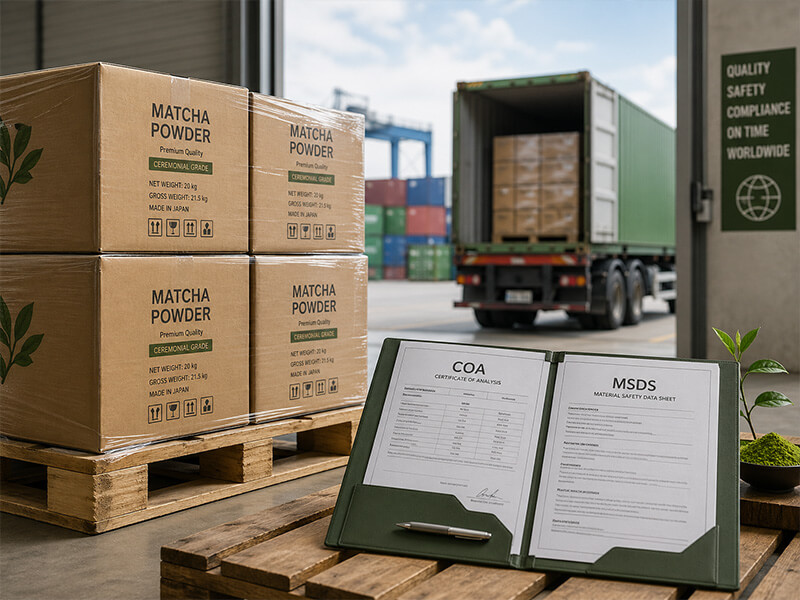
Choose the Route Around the OrderUrgency, volume, destination, customs route, and receiving capability should be reviewed together.
Freight Options
Match the Freight Mode to Volume, Timing, and Destination
There is no single shipping method for every matcha project. Samples, repeat wholesale orders, palletized bulk supply, and private label launches each need a different balance of speed, cost, control, and document handling.
Express Courier
Samples, document sets, small evaluation lots, and urgent technical review shipments.
Best for smaller parcelsAir Freight
Time-sensitive commercial orders that need faster transit than ocean freight.
Balanced speed and volumeSea Freight
Palletized bulk orders, recurring wholesale supply, and larger private label shipments.
Best for larger volumesDoor-to-Door Route
Selected projects needing coordinated pickup, customs support, and final delivery.
Availability varies by marketShipment Planning by Size
Choose the Logistics Route Around Shipment Scale
Parcel, air-freight, and palletized sea-freight orders require different booking data, document handoffs, and destination preparations.
Samples & Small Parcels
Confirm the courier route, consignee details, destination restrictions, and document needs for evaluation shipments.
Carton & Air Freight Orders
Align carton count, gross weight, dimensions, required arrival window, airport route, and forwarder handoff.
Pallet & Sea Freight Orders
Review pallet configuration, container or LCL planning, named port, transport documents, and destination receiving arrangements.
Commercial & Transport Documents
Align the Shipment Files with the Selected Route
This page focuses on commercial, customs, and transport handoff records. Batch COA, testing, and certification scope are reviewed separately so the shipping section does not repeat the quality-document pages.
Commercial Invoice
Product description, quantity, declared value, agreed delivery term, seller, buyer, and shipment references.
Packing List
Carton or pallet count, net and gross weight, dimensions, packing format, and shipment references.
Certificate of Origin & Customs Support
Origin or customs records are prepared when applicable to the product, route, and destination requirements.
Transport Document
Courier record, air waybill, or bill of lading is issued according to the selected freight mode.
Shipping Marks & Handoff Records
Carton marks, consignee references, booking details, and broker or warehouse handoff information are aligned before dispatch.
Shipment Coordination Workflow
Move from Shipping Brief to Arrival Handoff
Confirm the route in sequence so production, packing, documents, freight booking, customs communication, and warehouse receiving stay aligned.
Confirm the Shipment Profile
Share the product, quantity, packaging, destination, delivery deadline, and consignee or importer details.
Select the Commercial Route
Compare freight mode, delivery term, forwarder responsibilities, customs route, and estimated landed-cost structure.
Align Packing & Documents
Confirm case configuration, pallet needs, labels, shipping marks, commercial files, and product-specific records.
Book, Dispatch & Track
Coordinate pickup or handover, issue shipment references, and share tracking or forwarder updates after dispatch.
Prepare for Arrival
Confirm destination handling, customs communication, warehouse receiving, inspection, and exception reporting.
Arrival Handoff & Exceptions
Close the Logistics Loop at the Delivery Point
The final logistics stage is a controlled handoff: verify the shipment references, inspect what arrived, record discrepancies, and route any exception to the responsible carrier, broker, forwarder, or supplier contact.
Scope NoteDetailed barrier materials, sealing formats, and storage practices are covered on the Packaging & Storage page. This section is limited to shipment handoff and arrival checks.
Review Packaging & Storage Pre-Dispatch Count Check
Reconcile the released carton or pallet count with the packing list and booking references. Keep net powder weight separate from gross shipment weight before collection.
Marks & Booking References
Match shipping marks, consignee details, booking numbers, and route-specific labels to the approved shipment.
Arrival Inspection
Check carton condition, seal integrity, quantities, batch references, and visible transit damage at receipt.
Exception Reporting
Photograph and record shortages, damage, or delivery discrepancies promptly through the agreed logistics channel.
Shipping & Logistics FAQ
Questions to Resolve Before Production Release
Practical answers about Incoterms, forwarders, DDP availability, export documents, transit protection, and freight planning.
Which Shipping Term Is Best for a First Order?
The practical choice depends on your destination, order size, import experience, forwarder network, and need for landed-cost visibility. We compare available terms after reviewing the project details.
Can You Arrange DDP Delivery?
DDP or another managed door-to-door route may be available for selected destinations and products. Feasibility depends on local import rules, importer-of-record requirements, shipment size, and logistics coverage.
Can I Use My Own Freight Forwarder?
Yes. Buyers commonly appoint their own forwarder for EXW or FOB shipments. Collection address, booking details, export handoff, and document responsibilities should be confirmed before pickup.
Which Documents Are Supplied with the Shipment?
The shipping package is prepared according to the destination, delivery term, and freight route. It commonly includes the commercial invoice, packing list, transport document, and applicable origin or customs records. Product quality files are reviewed separately through the COA and certification process.
What Should Be Checked When the Shipment Arrives?
Inspect carton condition, seal integrity, received quantities, batch references, and visible transit damage before stock intake. Record any exception promptly and follow the agreed carrier, broker, or forwarder claim process.
When Should Freight Requirements Be Confirmed?
Confirm them before the final quotation and production release whenever possible. Early planning helps align packaging dimensions, carton quantities, documentation, launch timing, and landed-cost expectations.
COMPARE THE FULL DELIVERY SCOPE
Put Freight Quotes on a Comparable Basis
Compare the same packing configuration, named delivery point and cost scope. If quantities, carton dimensions or the delivery address change after the estimate, ask for the freight basis to be checked again. Keep the accepted version with the order.
| Quote detail | Specify in the brief | Confirm in the offer |
|---|---|---|
| Shipment size | Product kilograms, cartons, packing dimensions and gross weight. | The quantity and packing basis used for freight. |
| Delivery scope | Requested trade term and named place or port. | Who arranges each transport and clearance stage. |
| Cost inclusions | Freight, handling, insurance, clearance and final delivery needs. | Included charges and items priced separately. |
| Time window | Required dispatch or arrival date and receiving constraints. | Production timing separately from estimated transit. |
| Receiving review | Lot identification, documents, packaging checks and storage arrangements. | The agreed receiving procedure and issue-reporting route. |
Prepare a Shipping Brief
Confirm the Delivery Route Before the Order Moves Forward
Share the destination, product, quantity, packaging format, required arrival window, and preferred shipping term. We’ll review a practical freight and document route for quotation.
Include These DetailsPrepare Your Shipping Request
01Destination & Delivery Point
02Product & Packaging
03Estimated Quantity
04Required Arrival Window
05Preferred Shipping Term
06Forwarder or Importer Status