
White Label
Use an approved product direction with your branding and selected standard packaging for a faster launch route.
Build a branded matcha product by deciding the powder or blend, retail pack, ingredient information and launch quantity together.
Choose an existing product with branding or a custom development route. Powder quantity, filling runs and printed components have separate minimums; approve samples, specification and artwork before production.
Not every launch needs a fully custom formula. Choose the route that matches the brand timeline, budget, packaging, and differentiation target.
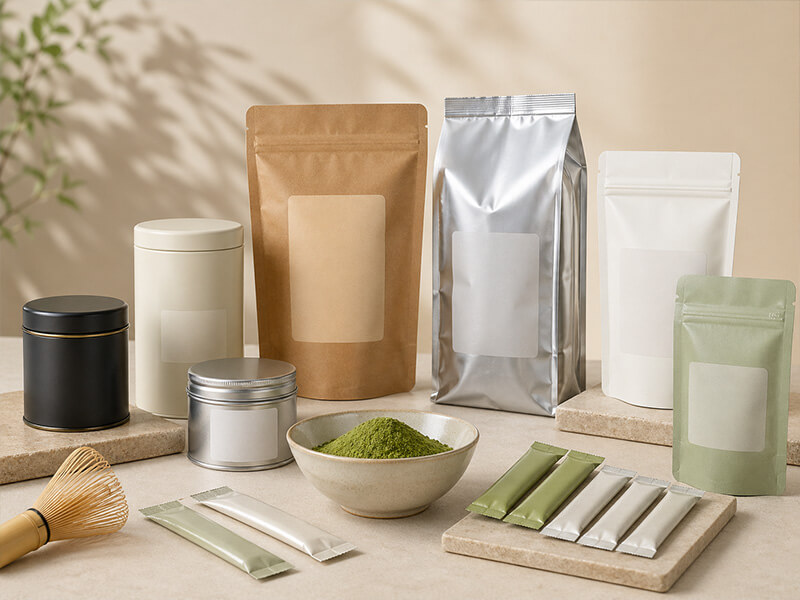
Use an approved product direction with your branding and selected standard packaging for a faster launch route.
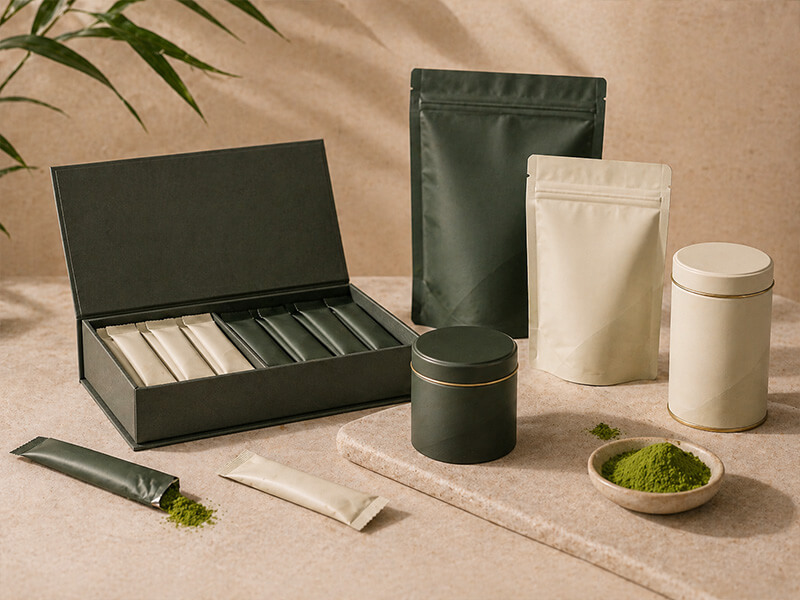
Adjust grade, flavor direction, serving format, sweetness, pack size, and positioning within an established production route.
Develop a new formula, blend, flavor system, dosage format, and packaging solution around a detailed product brief.
Compare packaging by product format, serving experience, barrier requirements, artwork complexity, MOQ, freight efficiency, and production lead time.
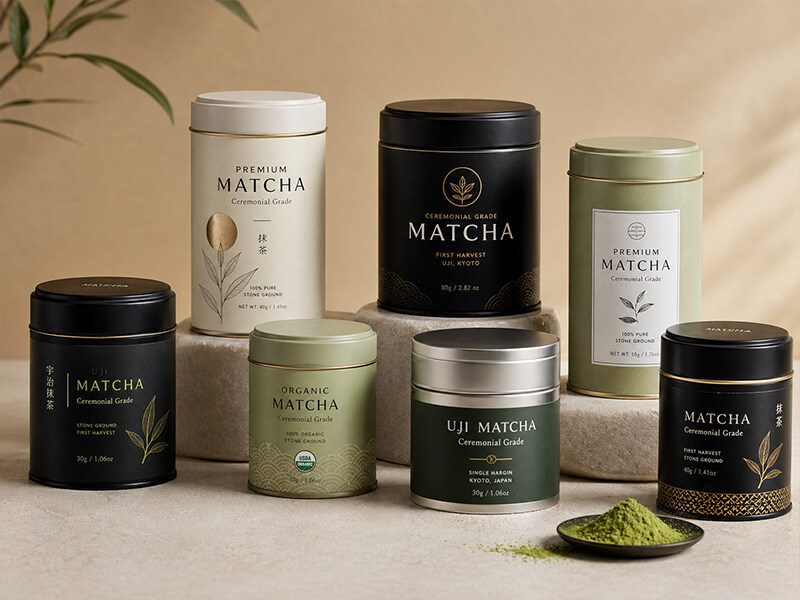
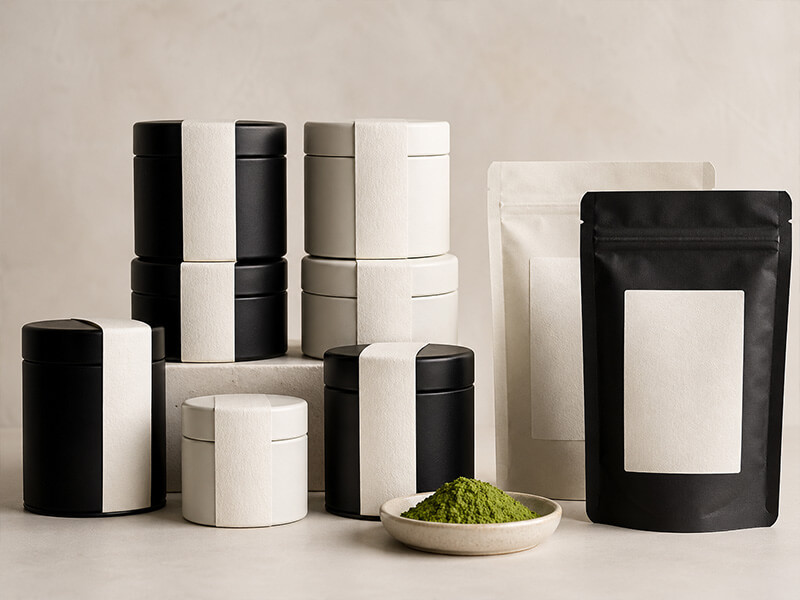
Premium retail packaging for ceremonial matcha, gifting, specialty tea, and higher-value product lines.
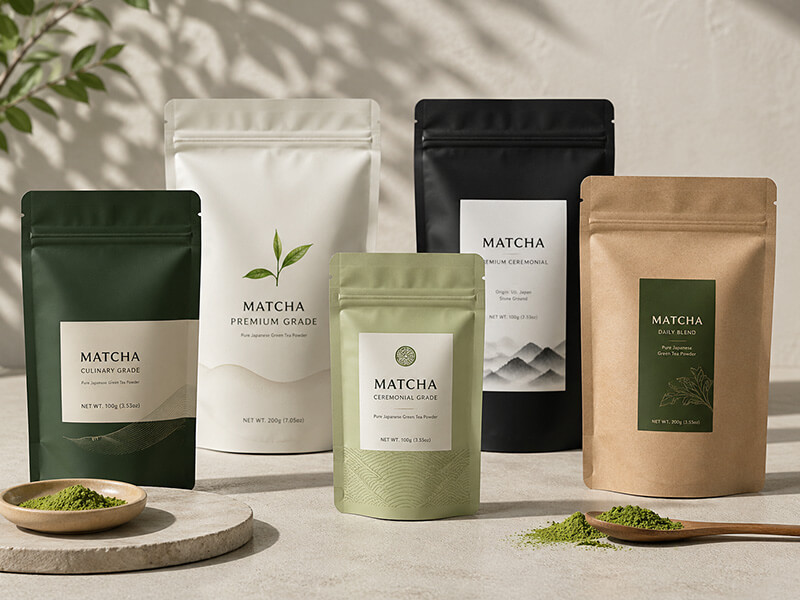
Flexible and freight-efficient packaging for retail powders, café supply, refill products, and larger net weights.
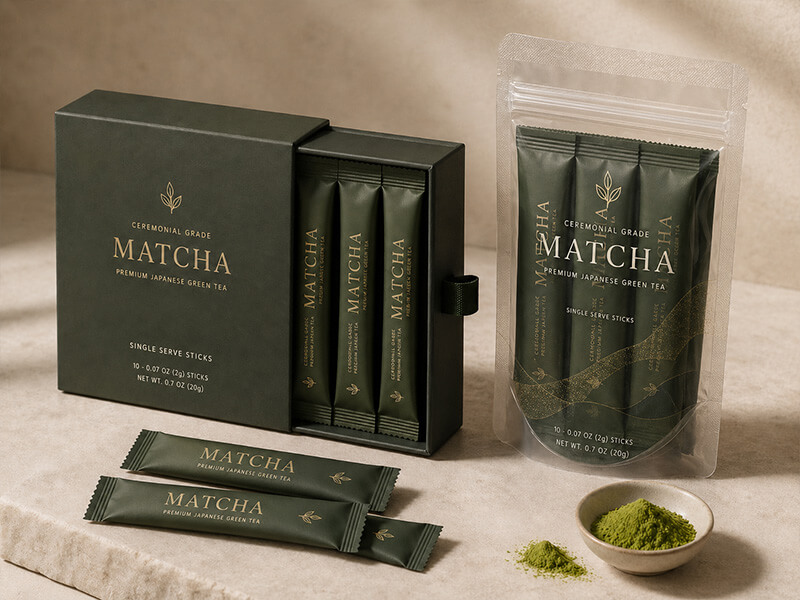
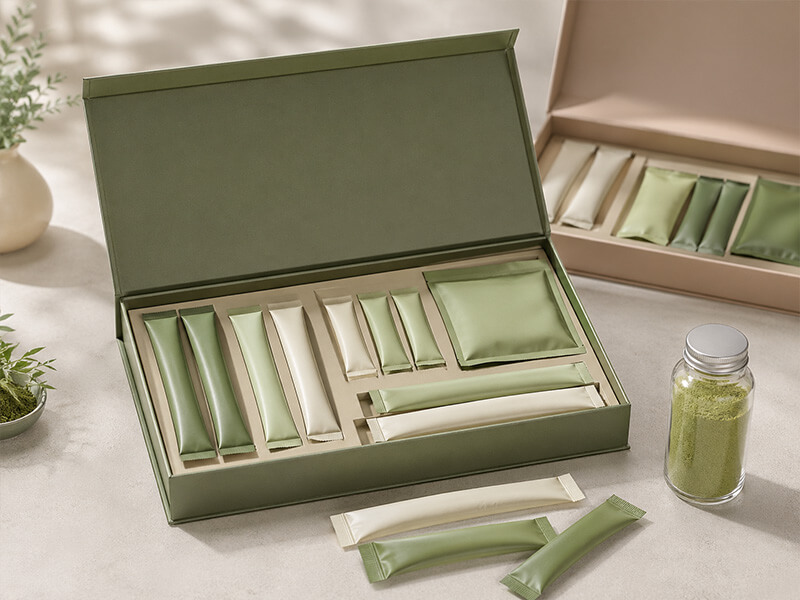
Single-serve packaging for instant drinks, sampling, travel, subscriptions, and convenient daily use.
Clarifying buyer and factory responsibilities early reduces avoidable reformulation, artwork, MOQ, claim, and lead-time problems.
| Project Area | What the Buyer Defines | What the Factory Supports |
|---|---|---|
| Market Position | Target customer, price tier, sales channel and claims | Product and packaging route recommendations |
| Formula | Desired taste, serving size, ingredients and restrictions | Grade selection, samples and feasibility review |
| Packaging | Format, net weight, branding and user experience | Material options, dieline, printing and packing |
| Compliance | Destination market and approved label claims | Available documents and production information |
| Commercial Plan | Launch quantity, forecast and delivery target | MOQ, quotation, schedule and shipment coordination |
A complete commercial brief helps identify the fastest realistic route without overdeveloping or under-specifying the product.
Keep formula, packaging, artwork, documents, MOQ, and launch timing connected through one approval process.
Share the target customer, market, product type, sensory direction, serving format, claims, and target price.
Compare grades, blends, flavors, sweetness, dosage, and technical feasibility through samples.
Approve pack size, material, barrier requirements, dieline, design files, labeling, and print proof.
Confirm the final sample, specifications, quantity, production schedule, inspection, and export plan.
A raw material certificate does not automatically cover a complete flavored formula or finished private label product. Confirm the exact certification and production scope before using claims.
Certificates apply only to confirmed products, operators, production scopes, markets, and transactions. Request current copies before using claims or approving artwork.
Review Certification Details

A bulk-powder minimum is not a finished-retail-product minimum. A useful OEM quote identifies each component and the approval it needs.
| Decision | What to Define | Approval or Quote Check |
|---|---|---|
| Product route | Existing powder, customized blend or new formula | Confirm sample version, ingredient list and agreed sensory and physical specification. |
| Fill quantity | Net weight per unit and first production quantity | Convert the planned units to net powder kg and confirm the filling-run minimum. |
| Printed materials | Pouch, tin, label, carton and print setup | State purchase quantities and any unused-component arrangements before print approval. |
| Release and labeling | Artwork, claims, lot code and batch reports | Buyer market review and factory production approval should refer to the same final specification. |
Final MOQ, revisions, lead time, certification scope, packaging, and production terms depend on the complete product brief.
For planning, multiply net powder kilograms by 1,000 and divide by the target fill weight in grams. Confirm filling allowance, planned finished units, units per carton and printed-component quantities separately. The arithmetic is a planning basis, not a guaranteed production yield or an approved packaging order.
Confirm the product or formula version, net weight, ingredient and allergen information, intended claims and destination-market label requirements. Approve the final artwork and component specification before authorizing printing.
White label uses an existing approved product and standard production route. Custom OEM involves more formula, flavor, serving format, packaging, testing, and development work.
The 10 kg starting quantity applies to selected bulk powders, not a finished private label run. Formula, fill weight, filling method, packaging components and printing can each set a different minimum. Request those quantities separately for the complete project.
Yes. Flavor, sweetness, serving method, ingredient restrictions, market, and packaging should be included in the brief. Sample revisions are required before production.
Printing normally requires the final editable artwork or print-ready original file using the approved dieline, colors, fonts, barcode, claims, and required label information.
We can provide available product and production documents, but the buyer remains responsible for final legal and regulatory approval in the destination market.
Share the product idea, formula direction, packaging, destination market, quantity, and launch target. We’ll recommend the most practical development and production route.