
Processing Conditions
Share heat exposure, shear, mixing order, hold time, pH, fat, sugar, and other relevant process conditions.
Specify industrial matcha around the process, inclusion level and acceptance criteria your production and quality teams will use.
Share the formula, process stages, powder limits, packing and demand forecast. Approve the application trial and written specification, then confirm production-lot documents and receiving checks before supply.
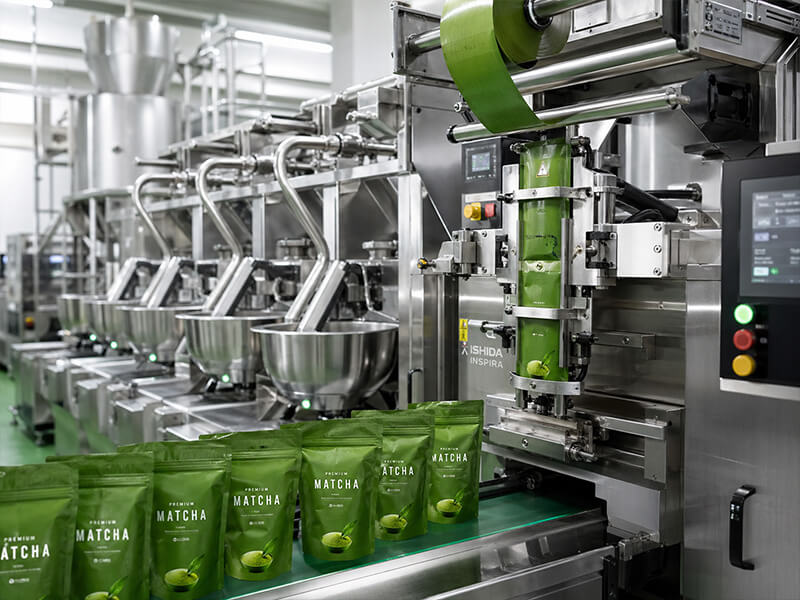
Product performance, technical files, packaging, capacity, lead time, and repeat-supply planning should be reviewed as one commercial program.
| Review Stage | Primary Question | Approval Evidence |
|---|---|---|
| Technical brief | What must the ingredient do in the process and finished product? | Application and specification requirements |
| Sample trial | Does the matcha meet dosage, color, flavor, dispersion, and process targets? | Pilot or bench trial results |
| Supplier qualification | Do documents and quality systems meet buyer requirements? | TDS, COA, testing and certifications |
| Scale-up | Does performance remain acceptable at production conditions? | Factory trial and approved method |
| Repeat supply | Can specifications, packaging, lead time, and inventory be managed consistently? | Commercial supply agreement and replenishment plan |
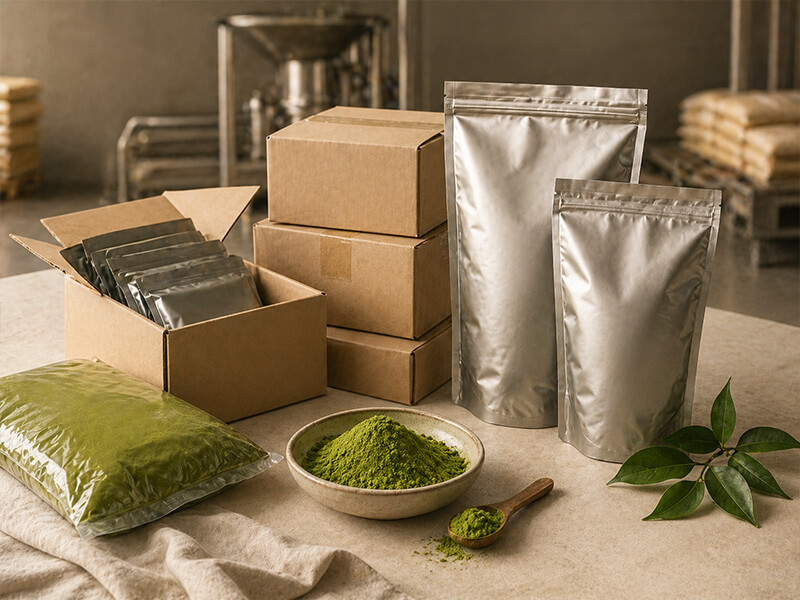
Industrial supply should protect the powder while fitting factory handling, batch size, storage, and replenishment requirements.
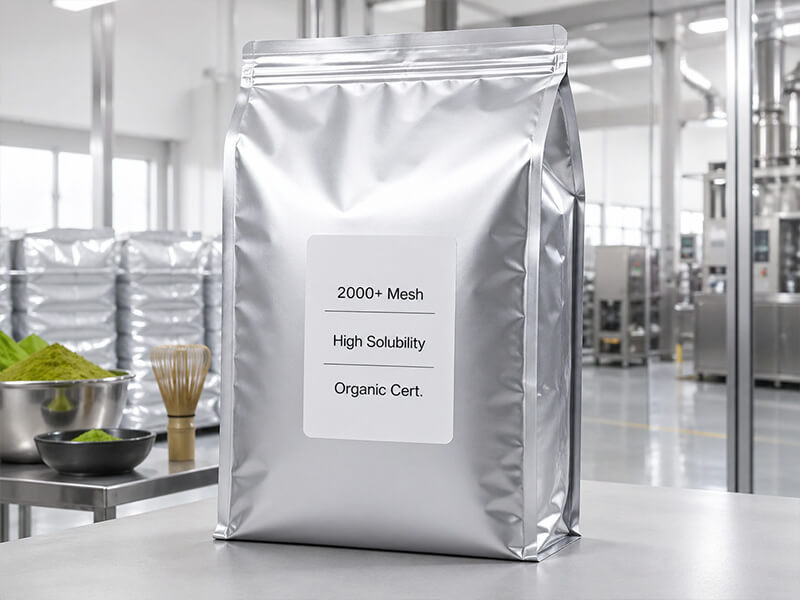
Test the intended matrix and process because manufacturing conditions change color, flavor, dispersion, dosage, and stability.
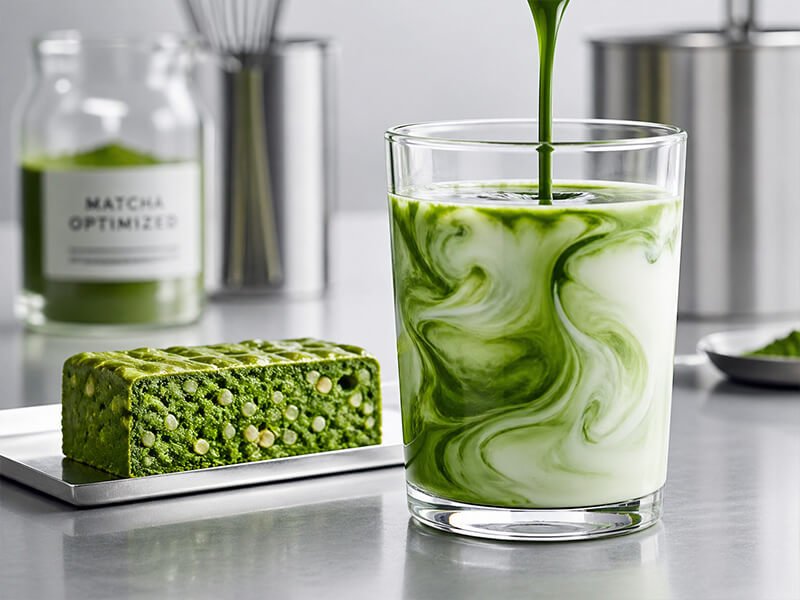
Matcha for liquid beverages, concentrates, premixes, and drink systems requiring controlled dispersion and flavor.
Industrial bakery, confectionery, desserts, and food systems requiring finished-product trials.

Matcha for sachets, tubs, premixes, instant systems, and multi-ingredient powdered products.
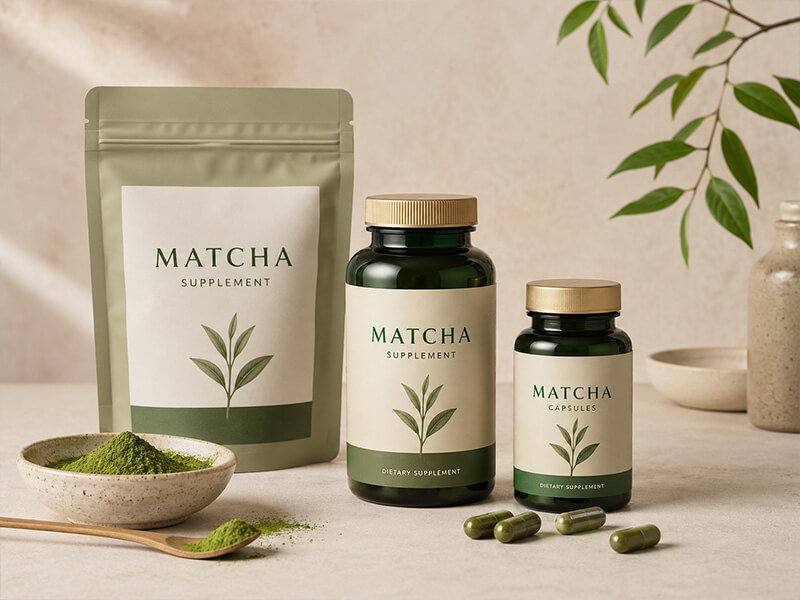
Ingredient supply supported by specifications, testing, dosage review, and production planning.
A defined approval path reduces the risk of selecting a sample that cannot be repeated in commercial manufacturing.
Provide the application, formula context, processing conditions, specification limits, volume, and packaging requirements.
Compare relevant product directions in the intended matrix using a documented test method.
Review TDS, COA, testing, production trial results, packaging, and commercial terms.
Coordinate production forecasts, batch review, inventory, shipment timing, and change control.
Document availability depends on the product, specification, production scope, destination market, and agreed testing plan.
Certificates apply only to confirmed products, operators, production scopes, markets, and transactions. Request current copies before using claims or approving artwork.
Review Certification Details



A bench trial and a commercial receiving standard serve different purposes. Connect them through a clear product code, approved process and agreed quality scope.
| Decision | What to Define | Approval or Quote Check |
|---|---|---|
| Process brief | Recipe, inclusion level, mixing and later processing | Evaluate the powder using conditions relevant to the planned production route. |
| Release specification | Agreed identity, physical limits and test methods | State acceptance criteria and additional tests rather than relying on an informal sample description. |
| Bulk handling | Inner pack, carton format and planned consumption | Confirm net kg, handling requirements and minimums for the selected packing route. |
| Receiving and continuity | Lot-linked COA, pack checks and demand forecast | Agree approval for new lots or specification changes; separate pilot quantity from annual demand. |
Technical feasibility, custom specifications, testing, packaging, MOQ, and repeat supply depend on the complete manufacturing brief.
Separate the conditions used in your trial from the characteristics the supplier is asked to deliver. Agree which product parameters, methods and acceptance criteria belong in the supply specification; retain process settings in the manufacturing trial record. Do not turn a single trial observation into an unsupported batch guarantee.
No. Keep the approved trial reference and written specification, then review the supplied lot identity, agreed COA scope and pack condition. Determine any incoming checks with your quality team before the order.
List the pilot net kg and packing separately from forecast demand. Selected standard bulk powders may start from 10 kg, while custom specifications, testing or packing can change the minimum and commercial basis.
Custom specification feasibility depends on the required limits, application, raw material route, testing plan, volume, and production capability. Share the full technical brief for review.
Yes. Samples should be evaluated using the intended formula, process conditions, equipment, dosage, packaging, and storage assumptions before commercial approval.
Depending on the product, buyers may request TDS, batch COA, microbiological, heavy metal, pesticide, allergen, GMO, traceability, certification, and other available supplier documents.
Bulk inner bags, cartons, foodservice packs, and selected custom formats may be available. Final pack size and MOQ depend on the product and production route.
Repeat supply planning can include forecasts, batch document review, production scheduling, inventory coordination, shipment planning, and communication of approved changes.
Provide the finished product, formula context, processing conditions, target dosage, required limits, packaging, annual volume, and forecast. We’ll prepare a focused technical review.