
TDS / Product Specification
Target product characteristics, quality parameters, packaging, storage, and shelf-life information.
Specification-led bulk matcha supply for powdered blends, nutrition products, beverage premixes, functional foods, and scalable manufacturing projects.
Identify tea leaf powder, a formulated blend, or an extract before setting the ingredient specification. Define the parameters, measurement methods, and batch evidence your quality team needs, then evaluate the selected product in the intended formulation.
The values below are review categories, not universal specifications. Final limits and results must be confirmed for the selected grade and production batch.
| Parameter | Review Direction | Approval Source |
|---|---|---|
| Appearance & color | Powder appearance and agreed visual direction | Product specification / approved sample |
| Aroma & taste | Sensory profile suitable for the formulation | Approved sample / sensory record |
| Particle profile | Fine powder appropriate to the intended process | Product specification |
| Moisture | Limit confirmed for the selected product | Specification and batch COA |
| Microbiology | Market- and application-oriented limits | Specification / test report |
| Heavy metals | Required parameters by destination and use | Batch or third-party test report |
| Pesticide residues | Testing scope according to market and project | Applicable laboratory report |
| Shelf life & storage | Confirmed packaging and storage conditions | Product specification |
| Packaging | Bulk unit size, inner bag, carton, labeling | Commercial specification |
Buyers can request a focused document package according to the intended application and market instead of receiving unrelated files.
Target product characteristics, quality parameters, packaging, storage, and shelf-life information.
Available results associated with the relevant production batch.
Applicable residue, heavy metal, microbiological, allergen, GMO, or other files according to project needs.
Relevant source, production, batch, shipment, and supplier-review information.
Food-safety systems and current technical documents are confirmed for the selected ingredient grade, manufacturing application, and destination market.
Certificates apply only to confirmed products, operators, production scopes, markets, and transactions. Ask for current copies before using a claim or approving artwork.
Review Certification Details
Each formulation route has a different sensory, processing, documentation, and cost priority.
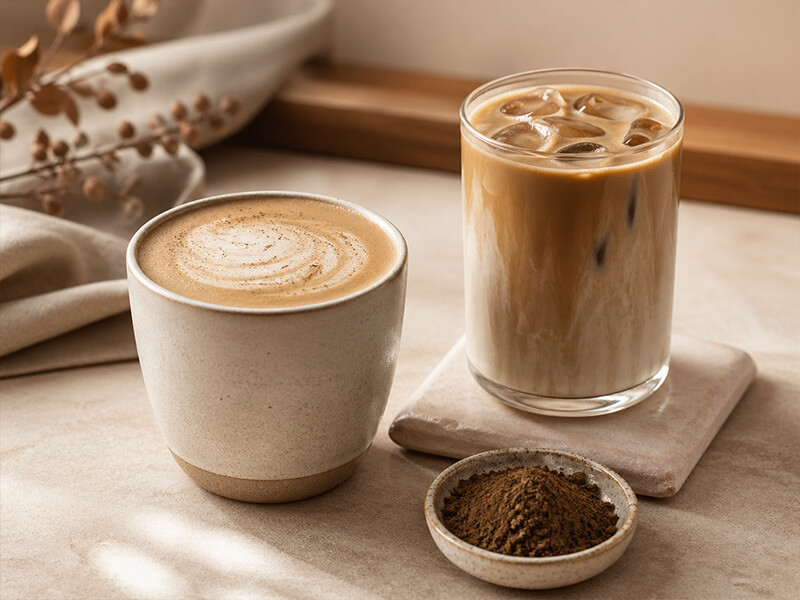
Review dispersion, flavor intensity, serving dosage, sweetener interaction, and blending consistency.
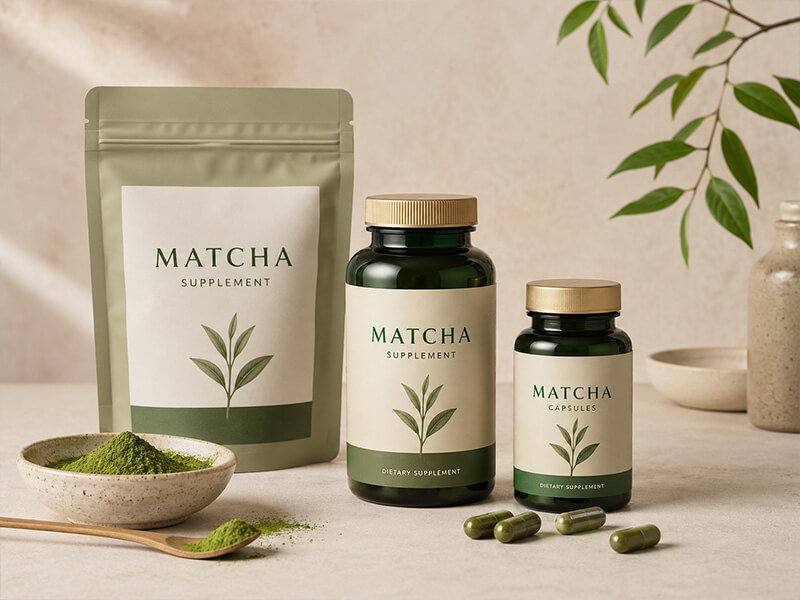
Align ingredient identity, specification, testing, dosage, label position, and market requirements.
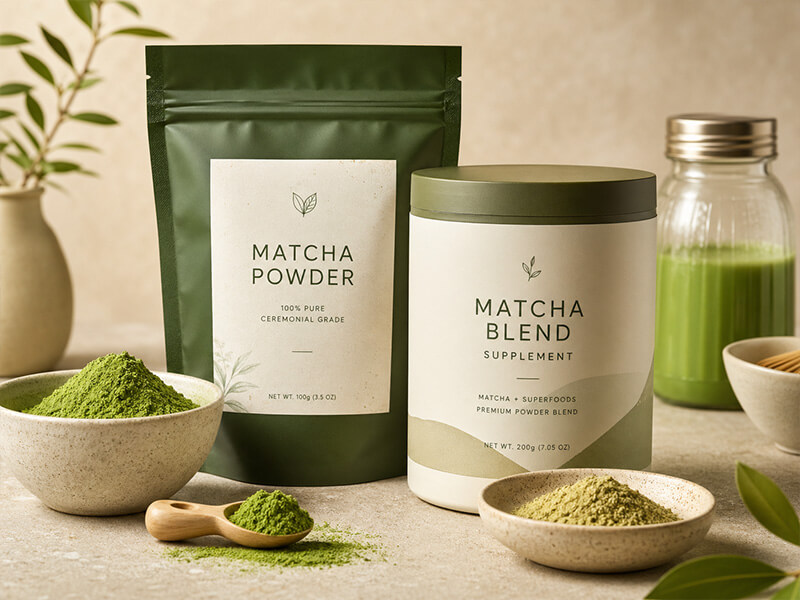
Test performance in the full recipe and process, including color, flavor, heat, fat, and moisture.
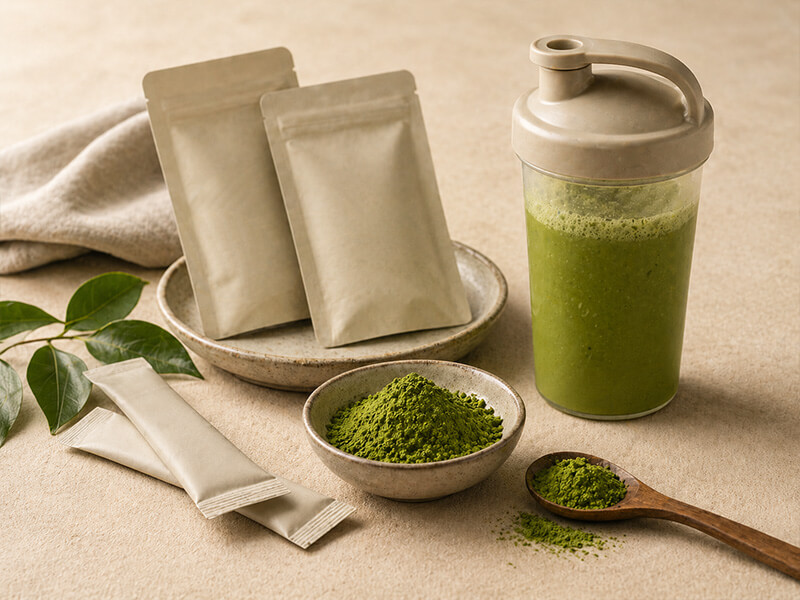
Focus on repeat blending, packaging units, lot control, production scale, and replenishment planning.
The ingredient route should produce an approved technical reference that procurement and quality teams can use for future orders.
Confirm application, market, quantity, quality parameters, documents, packaging, and target cost.
Evaluate suitable samples together with the available technical records.
Verify the selected matcha in the intended process and finished product.
Confirm the agreed product, packaging, batch review, and repeat-order process.
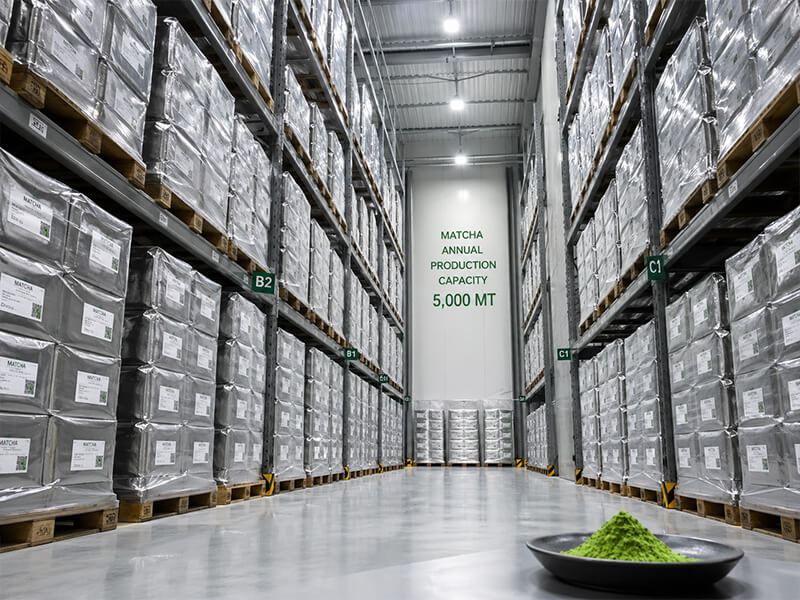
Bulk pack size should support product protection, warehouse control, production efficiency, and realistic order consumption.
Commercial ingredient packaging for manufacturing, blending, and repacking projects.
Coordinate batch labels and internal receiving records for traceability.
Share trial, launch, and repeat-volume expectations to plan a suitable supply route.
Align lead time, safety stock, shipment method, and the next required production window.
A useful ingredient specification states what is supplied and how each acceptance parameter is measured. Ask for the method and result associated with the selected product.
| Decision | Information to Record | How It Helps Approval |
|---|---|---|
| Ingredient identity | Tea leaf powder, blend, or extract; composition and any added carriers | Avoid comparing whole-leaf powder with a concentrate or formulated product. |
| Particle measurement | Measurement method, reported particle distribution or sieve result, units | A mesh number alone is not a complete texture or process comparison. |
| Dispersion trial | Recipe, equipment, mixing time, settling period, serving or processing conditions | Approve the observed result; do not infer instant solubility from fineness. |
| Analytical targets | Parameters, method, units, agreed limits, and relevant batch evidence | If a caffeine or catechin target is required, request product-level measurement. |
The specification describes the agreed acceptance criteria; a batch COA reports results for an identified lot. Read them together, then keep the relevant application trial as a separate part of ingredient approval.
Check the ingredient identity, product code, specification version, and batch reference on the files being reviewed. Distinguish a document supplied as an example from evidence associated with the sample or commercial lot under consideration.
Review each required parameter against its agreed criterion using the stated method and unit. Where a result is reported as not detected, request the reporting limit needed to interpret that result for your own requirement.
A document review does not replace the actual mixing, texture, dispersion, or finished-product trial. Link the accepted trial to the selected ingredient and identify which technical or application checks must be revisited if the product changes.
Use these role-based criteria to prepare a focused sample and document review. This section is an evaluation checklist, not a customer testimonial.
Needs samples and technical records that can be reviewed together, not a marketing grade description alone.
Checks specification ownership, batch COA, testing scope, traceability, change control, and document currency.
Balances approved technical fit with MOQ, packaging units, lead time, freight, and forecasted annual usage.
Answers are product-specific. Final specifications, certificates, testing, MOQ, and commercial terms are confirmed for the selected project.
Depending on the selected product and project, documents may include a product specification or TDS, batch COA, testing reports, allergen or GMO statements, traceability records, and applicable certificates.
No. Parameters and limits vary by product, production route, market, and intended use. Confirm the current specification for the exact sample or quotation.
Ingredient matcha can be considered for suitable formulations, but the buyer must confirm legal classification, claims, dosage, labeling, and market compliance for the finished product.
Testing can be discussed according to the required parameters, laboratory, destination market, sample stage, and commercial agreement.
Selected bulk matcha products can start from 10 kg. The applicable MOQ depends on the grade, specification, testing, packaging, and availability.
No. First confirm the ingredient identity, composition, processing route, and specification. If the formula needs an extract ratio or a measured active-content target, define that requirement separately; do not infer it from a matcha powder or ingredient grade description.
Request the particle measurement method and reported result, then test texture, dispersion, settling, and process behavior in the intended formula. Agree the specification and acceptance method for the selected powder rather than comparing mesh labels by themselves.
Send the application, destination market, required parameters, annual volume, packaging unit, and document checklist.