

On This Page
Matcha starts with tea leaves grown under shade. The harvested leaves are processed into tencha, dried without the rolling used for sencha, then prepared and milled into powder. The leaf route is central to understanding the product: a grinder creates a powder, while the cultivation and processing determine which tea has been powdered.
Japan’s Ministry of Agriculture, Forestry and Fisheries describes tencha as shaded tea that is steamed and dried without rolling, with matcha made by grinding that tencha. See the ministry’s explanation of Uji tea and its production methods. Actual equipment, harvest choices and finishing steps vary, so a general description should not be mistaken for a factory specification.
Following that sequence explains why two green powders can behave differently in the same drink. It also gives meaning to claims such as stone-milled, first harvest or single cultivar. Each describes part of the story. Together with an identified sample and specification, those details help a drinker or food business understand what it is selecting.
From shaded leaf to finished powder
A typical tencha-based matcha production route
| Stage | What happens | Useful buyer question |
|---|---|---|
| Cultivation and shading | Tea plants are grown and shaded before harvesting. | What raw material and cultivation information is traceable? |
| Harvest | Leaves are collected for the planned tea style. | Which harvest and leaf material does the sample represent? |
| Steaming and cooling | Fresh leaves receive steam heat and are cooled. | How is the primary processing route described? |
| Drying into tencha | Leaves are dried without sencha-style rolling. | Is the ingredient made from tencha? |
| Refining and preparation | Material is sorted and prepared for milling. | What finishing steps and lot controls apply? |
| Milling | Prepared tencha becomes powder. | What milling method and powder specification are supplied? |
| Packing and storage | The finished powder is protected and identified. | What packaging and handling conditions are validated? |
Read the stages as a sequence of decisions: grow the raw leaf, preserve and dry it into tencha, prepare the leaf material, then make and protect the finished powder. The equipment and operating choices within those stages vary with the crop and producer. For a specific ingredient, ask the supplier to connect the general route to the product code being offered.
1. Tea plants, cultivars and growing conditions
The crop comes before the mill. A cultivar is a cultivated plant variety, and a producer may work with one cultivar or several. The Kyoto Prefectural Tea Industry Chamber’s cultivar guide describes tencha varieties including Asahi, Samidori and Ujihikari, with different growth and tea characteristics.
A cultivar name identifies the cultivated variety, while harvest conditions and subsequent processing still shape the finished tea. When a particular cultivar is required, keep that requirement with the sample reference and purchase specification. This makes clear whether it is a documented ingredient identity or background information about the producer’s wider range.
For a blend, agree what is intended to remain consistent. The purchase might require a fixed cultivar composition, or it might require an agreed sensory profile maintained through controlled tea blending. Recording that choice gives both parties a usable standard for later batches.
2. Why the tea is shaded before harvest
Shading is a cultivation step, not a treatment applied to finished powder. Covers limit the sunlight reaching the growing leaves. Traditional production can use overhead coverings, while the design of a shading system depends on the grower and location. MAFF illustrates covering the crop before picking in its Japanese tea production overview.
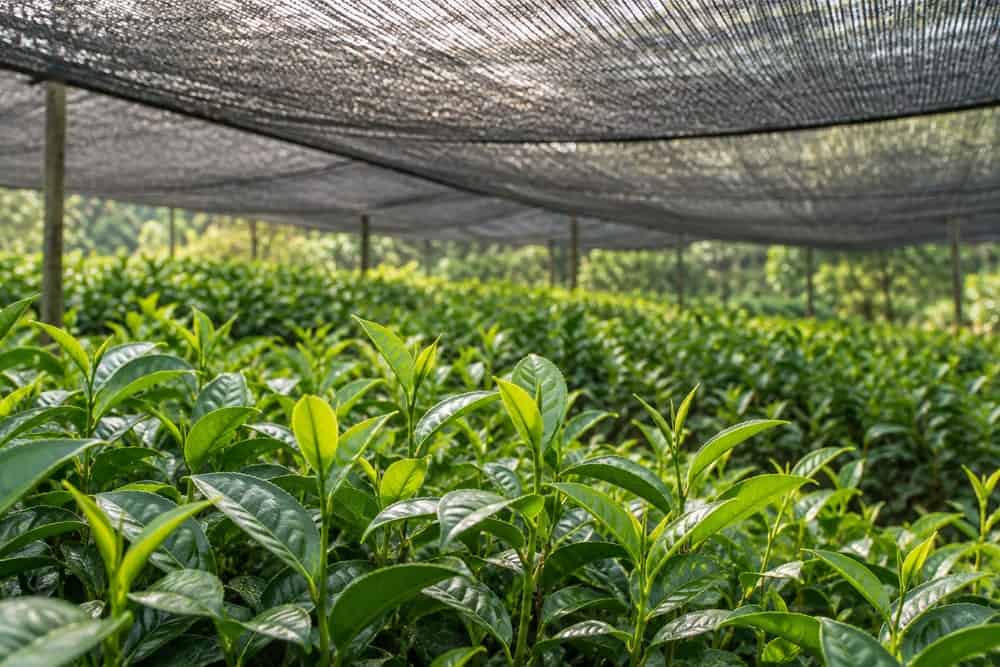
Shading changes more than the appearance of a field. In a controlled first-flush experiment, researchers found that different shading levels affected shoot growth and chemical composition. Under the tested conditions, some shade treatments produced higher theanine and lower epigallocatechin than unshaded growth. These results help explain why cultivation matters to the tea’s composition; they do not predict an exact flavor or chemical value for every commercial batch. See the original study of shading and tea-shoot chemistry.
The useful detail is how the offered leaf was grown: the covering method, its period and the crop’s development when harvested. These belong together. A universal shading duration would lose that context, whereas a clear account of the material behind a particular sample helps connect the cultivation description to the ingredient.
If a specification mentions shading, ask which part of the statement is documented: the method, the period, the source farms or simply the supplier’s general product description. A photograph of a covered field illustrates a practice; it does not trace a particular bag of powder to that field.
3. Harvesting the leaves
Harvesting supplies the raw leaf for the next stages. MAFF’s production chart places picking between shading and steaming. The leaf material selected at this point becomes part of the finished tea’s identity; later processing does not erase the need to know what was harvested.
Harvest descriptions help identify the material. Verify first-harvest or hand-picked claims where they form part of the purchase, then assess the sample in its intended use. An unsweetened bowl exposes a different balance of flavor and texture from a latte or a baked item, so the best fit still depends on what the ingredient needs to do.
Ask whether the harvest description belongs to the actual offered batch, an annual product standard or a promotional description of the supplier’s wider range. Keep the answer alongside the sample reference. Otherwise, a compelling story can become detached from the material that eventually arrives.
4. Steaming and cooling the fresh leaves
Steam heat is used early in the tencha route. The Kyoto tea industry’s manufacturing guide explains that steaming stops the activity of leaf enzymes. It then describes a cooling and spreading stage before the tencha dryer. This is different from leaving fresh leaves to develop the oxidation associated with black-tea manufacture.
Operating examples help explain what steaming and cooling accomplish, but their application depends on the leaf and the equipment. A buyer can request an understandable description of the route and the relevant product controls. This is more useful than copying a steam exposure setting from an illustrated example and treating it as a requirement for an unrelated production line.
Keep the processing explanation alongside, rather than in place of, the ingredient’s safety evidence. Steaming is an early manufacturing step; the material subsequently passes through handling, drying, milling, packing and transport. Request the controls and documentation relevant to the supplied powder and the process in which it will be used.
5. Drying without rolling: where tencha differs from sencha
The distinction between tencha and sencha is especially useful when evaluating powdered tea. In its description of matcha, the Japan Matcha Association identifies steamed leaves dried without rubbing and distinguishes powdered tencha from powdered sencha. Grinding alone does not remove that difference in their manufacturing histories.
Tencha drying removes moisture from leaves that have not undergone the sencha rolling sequence. The result is an intermediate leaf material for further preparation and milling. It is not yet the fine green powder used in a matcha bowl or drink recipe.
For a purchasing brief, “100% green tea powder” leaves a useful question unanswered: which green tea and which route? If tencha-derived matcha is required, say so and request confirmation. If a different powdered tea is acceptable for the application, identify it accurately rather than treating all green powders as interchangeable.
Tencha identity and mill performance are separate checks
Read a powder specification in two passes. Establish the tea identity first: the raw leaf and the cultivation and processing route that make it tencha-derived matcha. Then assess the milling result: the powder properties and its behavior in the intended recipe. These two checks connect the material’s identity with its practical performance.
Leaf identity
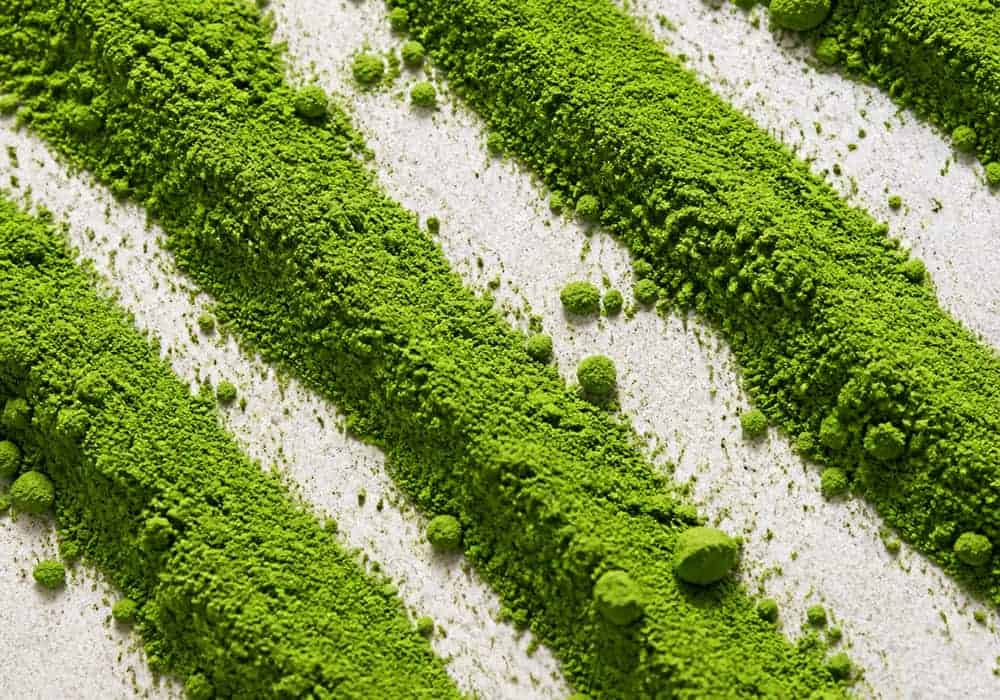
For example, very fine powdered sencha does not become tencha merely because it passes a particle-size check. Conversely, confirming a tencha raw material does not establish a particular texture, foaming result or milling machine. The association’s distinction between powdered tencha and powdered sencha concerns the underlying tea, rather than a visual test of how fine a mound looks.
Milling requirements
On a purchase record, keep “tea identity” and “milling requirement” in separate fields. If a stone-milled claim is required for your packaging, verify that claim even when a sample performs well. If a buyer only needs an agreed application result, say which result is being approved instead of adding an equipment claim that has not been checked.
6. Refining tencha before milling
Primary processing and final preparation need not happen in one continuous operation at a single site. Tea can be dried, held, sorted and finished before it is milled. MAFF’s production chart includes cutting and sorting followed by drying before the milling stage.
The Kyoto manufacturing guide also describes separating leaf and stem material because they dry differently. In practical terms, refining prepares the leaf portion intended for the finished powder. Buyers often hear this summarized as removing stems and veins; the exact sequence and equipment should be confirmed for the offered product.
Ask how the finishing stage is controlled and which characteristics the supplier specifies for the resulting material. “Stems and veins removed” is a useful process summary; the documented preparation and representative product specification explain what that means for a commercial supply.
Lot blending may also be part of product preparation. The key commercial distinction is between blending tea lots and adding other ingredients. A matcha made from several tencha lots is not the same product category as a sweetened latte mix containing sugar or other powders.
7. Milling tencha into matcha powder
Milling converts the prepared leaf into the powder used in drinks and foods. Traditional stone milling is illustrated in MAFF’s guide to Japanese tea. It is a recognizable production method, but a drawing or photograph of a stone mill does not establish the equipment used for an unverified product.

Where stone milling is required, put it in the written specification and request supporting information. Where another method is proposed, assess the actual powder and its documented properties against the application. Green color, a traditional-looking pack and a broad grade name leave the equipment question unanswered.
There is original research comparing these methods. A Japanese food-science study investigated stone-milled, ball-milled and jet-milled matcha and reported differences in particle size, shape, flow and foaming behavior. It supports assessing the resulting powder rather than treating the equipment name as a complete quality score. The findings describe the samples and conditions studied, not every mill’s output. See the milling-method comparison.
Describe the powder property being specified
“Fine powder” also needs context. A numerical particle-size statement is incomplete without a method and an explanation of what the reported number represents. An average, an upper limit and a distribution percentile are different descriptions. For a technical purchase, request the reporting basis before comparing two figures.
Test the property in the intended application
Carry the powder specification into a trial of the product being made. Use the intended water, milk or food formulation and the mixing equipment available in practice. Record the result as an application observation: for example, the texture in the served drink or the behavior during mixing. This turns information about the mill into a question that matters to the finished product.
8. Packing and storage are part of product quality
The manufacturing story does not end when the powder leaves the mill. The Kyoto tea industry’s storage guidance explains that heat, moisture, oxygen and sunlight can affect tea quality. That makes handling and packaging relevant to the product a customer receives, as well as to its initial appearance.
For buyers, separate the harvest date, milling date, packing date and best-before information where available. These dates describe different events. A package filled recently does not by itself establish when the leaves were harvested or when the powder was milled.
Ask which storage conditions support the supplier’s stated shelf life, whether the guidance applies before or after opening, and how the commercial packaging compares with the sample pack. A sample supplied in a small sealed pouch should not automatically be treated as proof of performance in a large container repeatedly opened during café service.
Connect the production stages to what you see in the cup
The finished powder brings cultivation, processing, finishing, milling and storage together. Those stages give plausible questions to investigate when samples differ, while a photograph alone cannot identify the cause. Describe the observed difference first, then connect it to the records and the preparation used.
For color, compare an identified sample under consistent lighting and preparation. For taste, distinguish the powder’s own character from the effects of milk, sweetness and dose. For texture, note what happens during mixing and drinking instead of judging fineness only from the dry mound. Each observation gives a more precise question to put to the supplier.
For example, visible clumps in a drink call for a review of both the powder and its preparation. Check whether the same mixing method was used before attributing the difference to the mill. A change after a recipe substitution similarly needs the changed ingredient recorded. This approach keeps the investigation tied to evidence that can be repeated.
Turn the production description into a batch comparison
A trial record should let another person repeat the comparison and understand the decision. Identify the samples, preparation and observations before recording an acceptance. The workflow below is for practical product development; safety release remains a separate process supported by the relevant controls and evidence.
Compare the powder under the same preparation conditions
Set aside a reference sample while it remains suitable for comparison, following its storage instructions. Give the reference and incoming sample neutral codes. Use the same powder weight, water, vessel and mixing procedure; record the actual settings rather than describing both preparations as “normal.” Assess them at the same interval after mixing.
Record observations separately: dry aroma, aroma in the drink, perceived bitterness, astringency, savory character, mouthfeel, visible clumps and appearance after standing. If appearance is photographed, keep the lighting, background and camera treatment consistent. A difference in a picture is a reason to investigate; it does not identify the cause or prove that one sample has a different origin.
Repeat the comparison in the product that will be sold
A water comparison helps reveal differences without the rest of the recipe. A second comparison answers the commercial question. Prepare the intended latte, baked item or other formulation using the same recipe and process for both samples. Record whether the difference is still noticeable and whether it matters to the planned product. Our guide to matcha for beverage brands connects that trial to formulation decisions.
The original milling comparison measured several powder properties rather than treating all fine matcha as identical. That supports asking which characteristic is relevant to your application. It does not provide a universal pass mark for a café drink, and the research samples should not become assumed specifications for a supplier’s current material.
Write the acceptance decision so another person can use it
Write an approval that identifies its scope: the ingredient code and sample, recipe revision, powder dose, documents reviewed and acceptance checks. This tells the next person what to repeat when stock arrives. General praise such as “premium” or “bright green” can remain a tasting note, but it leaves too much interpretation to function as the approval itself.
If an incoming lot differs, repeat the comparison before explaining the result as a milling problem. First check the sample identity, handling history and preparation record. Then ask the supplier to investigate the relevant product details. A controlled comparison narrows the question; it cannot reconstruct a factory’s operating conditions from the finished powder. Keep the approval record with the documents identified in the matcha supplier document checklist so the sample and paperwork remain connected.
What to ask about the product being offered
Use the process map to build a short, specific information request. A supplier does not need to disclose every confidential operating detail to answer basic questions about product identity, traceability and the specification being offered.
- Raw material: confirm whether the powder is tencha-derived and whether the product contains only tea or additional ingredients.
- Origin and traceability: identify which origin statements apply to the actual batch and what supporting records are available.
- Cultivation and harvest: request evidence for any shading, harvest or cultivar claims required by your brief.
- Processing and milling: record the general route and substantiate any method used in product claims.
- Acceptance specification: agree which characteristics will be checked and how the approved sample is referenced.
- Commercial supply: confirm packaging, storage instructions and the procedure for relevant specification changes.
The questions to ask before buying matcha in bulk can be used alongside this manufacturing checklist. Ask for an explanation of any discrepancy between the quotation, product sheet and sample label before approving an order.
Keep a process description separate from a test report. A manufacturing statement describes how the supplier says the product is made; a batch-linked certificate of analysis reports specified checks on identified material. Each has a role, and neither automatically supplies everything the other does.
When comparing matcha suppliers beyond price, look for consistency between those records and the sample’s performance. A detailed origin story without a clear product code is difficult to carry into a purchase specification. A short but verifiable description can be much easier to use.
Frequently asked questions
What is matcha powder made from?
Tencha-based matcha is made from tea leaves processed into tencha and then milled. A finished latte mix or flavored matcha product can contain other ingredients, so check its ingredient list rather than assuming every green powder is pure matcha.
Can I make matcha by grinding ordinary green tea?
You can make powdered green tea, but grinding ordinary sencha does not reproduce the cultivation and tencha-processing route. A household grinder also does not establish the same powder characteristics as a commercial product. Describe the result according to the material actually used.
Is matcha fermented?
The standard tencha route described here uses steaming early in processing rather than deliberately developing black-tea-style oxidation. “Fermented matcha” may describe a different formulated or processed product; ask what the seller means instead of assuming it is part of ordinary matcha manufacture.
Is every matcha stone-milled?
Do not assume a particular mill from the word matcha alone. Stone milling is a traditional method, and any claim that a specific product is stone-milled should be verified. Buyers can request the method and assess the resulting powder for their intended use.
Does matcha need added green coloring?
A pure matcha specification should identify the tea ingredient without assuming added coloring. A bright photograph does not prove purity, and color alone cannot verify the ingredient composition. Check the written specification and labeling information for the product being purchased.
Can the whole process happen in one factory?
It can involve more than one grower or processing business. The important buying question is how the material is identified and controlled between stages. Ask the supplier to explain the chain for the proposed product without assuming every operation happens at one site.


