

On This Page
Matcha is green because it contains chlorophyll, the pigments that help tea leaves capture light. Shade cultivation can increase the leaves’ chlorophyll content before harvest. The finished powder’s appearance then reflects the leaf material, processing, storage and the conditions in which you look at it.
That explains why green is expected, but it does not make a photograph a grading system. Two powders can look different and still suit different uses. The same powder can also look lime green on a phone, deeper green in a bowl and pale green after dilution. To judge matcha color fairly, first establish what you are comparing.
What makes matcha green?
Chlorophyll belongs to the leaf
The green does not have to be added to pure matcha. It comes from tea leaves, which are processed into tencha and finely ground. Our introduction to matcha explains that product identity; here, the important point is that the powder carries the leaf’s pigments into the cup.
Chlorophyll is a family of compounds rather than one universal green substance. An original study of chlorophylls in green teas identified multiple pigments and derivatives across the teas examined. It also distinguished green chlorophylls from brownish derivatives such as pheophytins. That is a more useful picture than treating all green tea as one fixed shade.
However, a pigment explanation is not a way to read a chemical analysis from a spoonful. Looking at powder does not tell you how many milligrams of chlorophyll it contains, its complete composition or its country of origin. Those are separate questions with separate evidence.
Why shade cultivation matters
In research on shading-induced chlorophyll accumulation, reduced light increased chlorophyll in the tea material studied, alongside changes in the regulation of chlorophyll synthesis. This helps explain the connection between shade cultivation and green leaf color.
It does not establish a simple shopping rule such as “the brightest powder had the longest shade treatment.” Cultivar, the starting material and subsequent handling also matter. Nor should a home grower assume that keeping a tea plant in darkness indefinitely will produce better matcha. A crop has to remain healthy as well as provide suitable leaves.
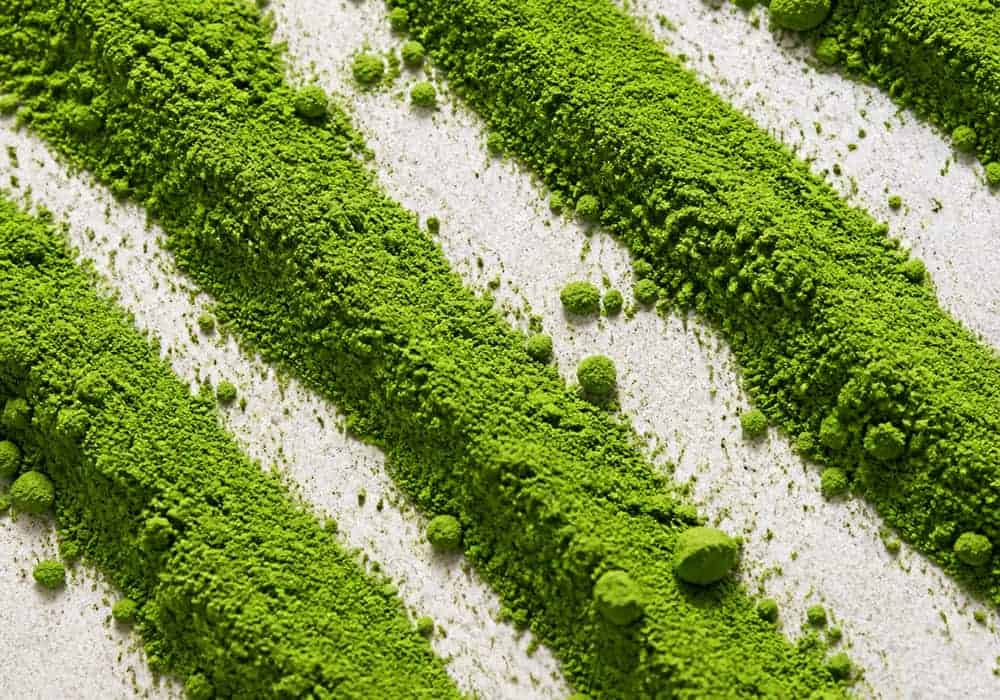
What color should matcha be?
For a product sold as pure matcha, expect a recognizable green tea powder. Beyond that, words such as vivid, deep, light, yellowish and olive are descriptions to investigate, not a complete verdict. “Bright green” is especially loose: it can mean a more saturated green, a lighter green or simply a well-lit photograph.
| What you notice | A useful next question | What appearance alone cannot establish |
|---|---|---|
| A vivid green powder | Does the actual sample have the aroma, flavor and texture you need? | Authenticity, origin, safety or a universal grade |
| A muted or yellowish green | Was it this color on opening, and how does it compare under the same light? | The exact cause or the date it deteriorated |
| A darker green patch | Is it a shadow, a deeper layer or an uneven surface? | A different ingredient or contamination |
| An unexpected change after storage | What changed in the pack, storage conditions or product? | Whether the powder remains safe to consume |
| A pale green drink | How much powder and liquid were used, and what else is in it? | That the dry powder was necessarily poor quality |
For a buyer, the relevant comparison is usually the approved sample for the same product and application. A matcha intended to remain visible in a milk drink has a different practical job from a powder presented in a bowl with water. A color preference can be legitimate without becoming a claim that every other shade is defective.
Is greener matcha always better?
A strong green can be desirable, particularly when appearance is part of the product experience. But “better” still needs an object: better in a clear bowl, a pale drink, an opaque container or a finished food? A beautiful dry powder is not automatically the best fit for all of them.
Imagine choosing between two otherwise acceptable samples. One looks more vivid on a white plate; the other has the flavor your finished product needs. If you buy solely from the plate, you may optimize the wrong stage of the experience. Evaluate color and flavor separately, then decide which combination meets the brief. Our guide to evaluating matcha quality before ordering takes that broader approach.
Why does matcha turn yellow, olive or brown?
Separate a starting color from a change
A powder that was yellowish when you first opened it presents a different question from a powder that visibly changed while you stored it. In the first case, ask about the supplied material and whether it matches the description. In the second, you also have a handling history to investigate.
Before calling a difference deterioration, compare equivalent views. A tin under warm kitchen lights and a thin layer beside a daylight window are not equivalent. If possible, compare the current powder with a properly retained reference under one setup. A memory of the original shade is less reliable than a recorded comparison.
Processing and storage leave a history
Matcha involves more than drying green leaves and putting them into a grinder. Japan’s agriculture ministry’s tea-processing overview places steaming, drying, sorting and milling within the route from leaves to matcha. These steps help explain why the green of a living leaf and that of a finished powder are different things to assess.
Storage also matters. An experimental study of matcha storage conditions examined pigments, surface color, package oxygen and sensory quality at different temperatures. Quality outcomes differed with the conditions. Its controlled packages and study periods should not be turned into a shelf-life promise for every opened tin.
For an actual pack, follow the supplier’s storage instructions and date information. If its color changes, record when the pack was opened and where it was kept. Include any damaged seal or possible exposure to moisture. Our article on matcha storage and freshness covers the wider handling questions.
Can the shade tell you how old matcha is?
No. A photograph cannot provide a milling date or reliably count weeks since opening. An old-looking color might reflect the starting material, the viewing conditions, storage changes or several factors together. Equally, a powder that still looks attractive does not supply a missing storage record.
Be cautious with claims that a specific shade proves a specific age. For a commercial purchase, request the relevant dates and lot information directly. Color can prompt a question; it cannot fill in undocumented history.
Why does the drink look different from the powder?
The comparison changes when ingredients change
Dry powder, a water suspension and a milk drink are three different presentations. Water quantity, the amount of powder, the vessel and foam all affect what you see. Milk or a plant-based drink introduces its own pale background. An attractive dry green will not reproduce unchanged across those settings.
This is why photographs of a dark water-only preparation and a pastel latte cannot settle which product has more chlorophyll. They do not even show the same type of sample. If you want to compare powders for a particular beverage, use the same liquid, quantities and vessel for each, then view them at the same point after preparation.
A drink that looks greener after it stands may also have become uneven. Look at whether material has collected at the bottom before describing the whole drink by the darkest layer. The top, foam and sediment should not be compared as though they were identical samples.
Why finished-product color needs its own trial
Color in a finished product needs its own trial. A pigment’s appearance in dry powder does not guarantee how that powder will look after your processing, mixing and storage. If a product changes color, keep the conditions in the discussion: the formula, process, packaging and elapsed time.
For example, judging a powder immediately after mixing does not answer how a packaged beverage will look later. Conversely, a disappointing color in one formula does not identify the powder as defective without a comparison. Keep the starting powder, a simple preparation and the finished product as separate observations.

How to compare matcha color without fooling yourself
A practical comparison at home
Use a clean, neutral-colored surface and place the samples side by side in the same light. Avoid a strong green placemat or yellow lamp that changes the impression. Make each powder layer reasonably similar, and look at the samples directly before reaching for the camera.
If you also compare drinks, keep the vessel and quantities consistent. Record what you changed rather than adjusting one sample until it looks like the other. The purpose is to notice a difference under a repeatable setup, not to stage the most flattering image of each powder.
This is a household comparison, not a laboratory measurement. It can help answer “which appearance do I prefer under these conditions?” It cannot verify authenticity, detect residues or prove a supplier’s origin claim.
Why product photographs can disagree
A photograph contains decisions about lighting, exposure, background and editing. Your display adds another viewing condition. Two website pictures may differ even when neither seller intends to mislead. Screenshots are useful for discussing a product, but weak evidence for accepting or rejecting its actual shade.
When asking a supplier about color, request a current sample rather than asking them to match a phone image exactly. If photographs are needed for a remote review, agree on one setup and include an identifiable reference sample in the same frame. Keep an unedited original, and avoid treating a messaging-app preview as a color standard.
What a business should put in a color specification
Describe the observation you need to control. “Green powder” leaves much unresolved. “Similar to the approved reference when assessed using the agreed method” creates a clearer starting point, provided the reference and method are actually defined.
- Identify the product code, lot and reference sample.
- State whether assessment concerns dry powder, a prepared suspension or the finished application.
- Keep the sample presentation, viewing conditions and timing consistent.
- If instrumental measurements are used, agree on the method and acceptance limits with the laboratory or supplier.
- Record flavor and aroma decisions separately from the appearance result.
A color number without the measurement conditions can create another false comparison. Do not adopt a numerical limit from an unrelated paper simply because it appears precise. Choose a method that answers your product question, then establish what variation you can accept.
Can color tell you whether matcha is safe?
No. The FDA explains that food can be unsafe without looking or smelling spoiled. A vivid green therefore cannot clear a suspect pack for use. Conversely, a dull shade alone does not identify a particular hazard.
If the pack has an unexplained change, damaged seal, visible mold or possible contamination, stop using it and contact the seller. Do not taste it to settle a safety question. For businesses, quarantine the affected stock while the responsible quality team investigates; a color comparison is not a release test.
Common questions about matcha color
Does neon green prove that color has been added?
No. An intense-looking image can reflect the powder, lighting or editing. An image cannot establish the ingredient list. Check the product declaration and ask the supplier for clarification when the identity or appearance seems inconsistent.
Is light green matcha necessarily low quality?
No. First distinguish a pale dry powder from a diluted drink. Then compare the actual product’s flavor, aroma and intended use. A lighter appearance is a reason to ask questions, not a complete grade.
Can I use brownish matcha in a product where the color is hidden?
Hiding the color does not resolve an unexplained change or a safety concern. Establish why the powder is different and whether it meets the applicable specification before deciding on another use. Do not treat an opaque finished product as a way to rescue suspect ingredients.
Can green color distinguish Japanese matcha from Chinese matcha?
No. Color does not document origin. Compare products using their traceable information and actual samples rather than using one shade as a country test.
If you are comparing matcha for a commercial product, describe the application and the appearance you need alongside the flavor. A useful sample discussion starts with how the powder will be used, rather than a promise to reproduce the brightest photograph.


