

On This Page
You can grow the tea plant used to make matcha, provided your climate and growing conditions suit it. But you do not plant a separate species called “matcha.” You grow Camellia sinensis; matcha is the finished tea produced from suitable leaves through cultivation and processing.
For a home grower, that distinction changes the project. Keeping a tea bush alive, harvesting usable leaves and producing finely ground tencha are three different achievements. A healthy patio plant can make a worthwhile gardening project without supplying the same powder you buy from a specialist producer.
What plant does matcha come from?
Look for Camellia sinensis
Kew identifies the tea plant as Camellia sinensis. A packet advertised as “matcha seeds” should therefore lead you back to a properly identified tea plant, not a newly named botanical species.
Ask a nursery for the botanical name and, where available, the cultivar or source of the material. An ornamental camellia in a garden is not an adequate substitute simply because it belongs to the same genus. Do not harvest unidentified plants or assume that every nursery plant has been raised for edible-leaf use.
The finished tea also depends on what happens to the leaf. Our guide to how matcha is made follows that route in more detail. Buying a plant with “matcha” in its listing title does not guarantee the necessary leaf characteristics or a particular finished flavor.
The right cultivar is a local question
A cultivar known for commercial tea production elsewhere is not automatically the easiest plant for your garden. Before choosing, tell the nursery your lowest winter temperatures, summer conditions, exposure and whether the plant will remain in a container. Ask what has performed well in comparable local conditions.
Keep two questions separate: “Will this plant grow here?” and “Will its leaves produce the tea I want?” Success with the first is necessary, but it does not settle the second. This is also why commercial origin stories are not planting instructions. A place can have suitable growing conditions while an individual garden within it does not.
Can you grow a tea plant where you live?
Start with the soil and drainage
Washington State University’s tea establishment guidance recommends well-drained, acidic soil and gives a pH range of 4.5–5.5 for its production context. This is useful evidence that soil conditions deserve attention before planting, rather than after a struggling plant begins to yellow.
Get the growing medium or garden soil checked and interpret the result with local horticultural advice. Do not add sulfur, lime or fertilizer simply because an online tea guide mentions it. The appropriate amendment depends on the current soil, the material used and the amount needed. A potting medium sold for acid-loving plants may be a practical starting point, but the label still matters.
Look at where water goes after heavy rain or watering. A site can look shaded and comfortable while remaining wet around the roots. Choose the plant’s location based on conditions you can manage, not only on where it looks attractive in a photograph.
Consider temperature, wind and seasonal growth
University of Florida guidance for home tea growing discusses differences between China and Assam types, damage from wind and the problems of excessively wet soil. Its advice is written for Florida; a calendar from that setting should not be transferred directly to a cold or dry climate.
A hardiness label is a starting point for a nursery conversation, not a complete prediction of leaf production. Ask about exposed wind, late cold events and the length of the active growing season. The outcome you want is healthy, harvestable growth, not merely a plant that survives the winter.
Make a simple site record before buying: available space, direct sun through the day, wind exposure and access to water. If the pot will need to move for protection, decide where it will go and how you will move it once it is larger. A workable plan is more valuable than selecting a famous cultivar whose needs you cannot meet.
Can you grow matcha indoors or in a pot?
A container gives you more control over the growing medium and where the plant stands. It also makes you responsible for the limited root space, watering and seasonal protection. It does not turn an unsuitable indoor corner into a tea-growing environment.
The Royal Horticultural Society’s tea-plant profile describes a sheltered site with acidic, moist but well-drained soil and discusses propagation by seed and cuttings. That is a better starting point than assuming “shade grown” means a tea plant needs almost no light.
For indoor growing, ask how you will provide adequate growing light and airflow, rather than relying on the room feeling bright to a person. Keep expectations modest until the plant has shown sustained healthy growth. A decorative tea plant on a windowsill is not yet a reliable supply of leaves.
Seeds, plants and the first harvest
Should you start from seeds or buy a plant?
Seeds let you follow the full growing process, but they add uncertainty before you have a usable plant. A started plant lets you inspect its condition and begin with established growth. Neither option guarantees a specific matcha flavor or yield.
For a first project, compare suppliers on information as well as price. Can they identify the plant, explain how it has been grown and offer care advice relevant to your location? If it is sold for edible-leaf use, ask about treatments and any restrictions that affect harvesting. An incomplete plant listing is not improved by a picture of a bowl of matcha beside it.
Do not treat seed packets and a named cultivar plant as interchangeable purchases. If retaining a particular cultivar is important, ask the nursery how the material was propagated and what identity it can document. The label should make clear what you are receiving.
When can you start picking leaves?
There is no useful universal promise that every newly purchased tea plant will supply a tin of matcha after a fixed number of months. A plant’s size, establishment and growing conditions all affect the decision to harvest. Let healthy growth guide the conversation with your nursery or extension service.
Keep the first aim small: establish the plant, learn its seasonal rhythm and avoid removing so much young growth that the gardening project suffers. Record when new shoots appear and how the plant responds to your care. If growth is weak, diagnose that before adding a shade treatment or a harvest schedule.
The question “how many plants do I need?” also needs a realistic output target. A few leaves for learning about tea are different from a dependable supply of dried, processed powder. Do not convert the fresh weight you pick directly into an assumed finished matcha yield; processing involves losses and removal of material.
How does shading fit into growing matcha?
Pre-harvest shading is a managed treatment
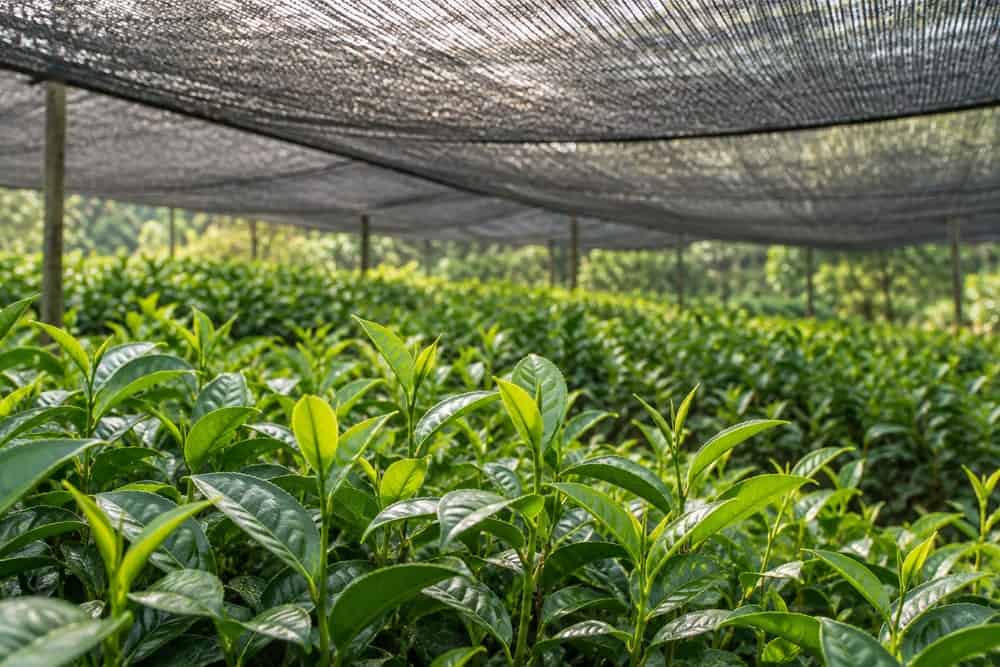
Shade cultivation is part of producing the leaf material for matcha, but it is not the instruction “keep a young tea plant dark.” The plant must first grow well enough to support the treatment and harvest. A net over a weak patio plant does not recreate a managed tea field.
Original research on shading and chlorophyll helps explain why the treatment can alter tea leaves. For a home grower, the important distinction is between controlling the crop before harvest and finding a suitable everyday location for the plant. Those decisions should not be collapsed into one rule.
If you want to explore shading after the plant is established, seek locally applicable advice and keep a record of the treatment and recovery. Avoid copying a commercial shading percentage from a video without knowing how the cover was measured, when it was applied or what condition the plants were in.
Why more shade is not automatically better
A study of repeated shade cultivation examined physiological stress in tea plants, including reduced photosynthetic ability under the experimental conditions. It shows why shading has a cost to manage, rather than being an unlimited quality switch.
Do not use a greener leaf as your only sign of success. Pay attention to the plant as a whole, its recovery and whether it continues to grow. For an inexperienced grower, protecting a healthy plant is a more useful first achievement than trying to reproduce an intensive commercial treatment immediately.

Why home-grown tea leaves do not automatically become matcha
Cultivation is only the first part
Japan’s agriculture ministry’s tea-processing overview separates the routes used for different teas and shows tencha as the material milled into matcha. Steaming, drying, sorting and milling are processing decisions, not steps that happen naturally once a plant is shaded.
A home project therefore needs a second plan after harvesting. How will the leaves be handled promptly and consistently? What equipment will be used, and how will cleanliness and storage be managed? If the answer is simply “dry them somehow and blend them,” the result should not be assumed equivalent to professionally produced matcha.
This does not make the project pointless. Growing tea can teach you about the leaf and the work behind the finished product. It simply gives the outcome a more honest name and a more realistic aim: learning to grow and process tea, rather than guaranteeing a particular commercial powder.
A kitchen grinder solves only one problem
Grinding reduces material in size. It does not establish that the starting leaf was suitable tencha, correct an unsuitable growing treatment or document the conditions used during drying. A powder can be green and homemade while still differing markedly from the matcha expected in a bowl.
For the same reason, do not expect the label on a small domestic mill to certify the result. Assess what the equipment actually does and whether it is suitable for food contact and cleanable for your intended use. The broader differences between leaf teas and matcha are covered in our matcha versus green tea comparison.
Choose a goal that matches the project
| Your goal | A useful first milestone | What remains to be solved |
|---|---|---|
| Keep a tea plant at home | A correctly identified plant showing healthy growth | Long-term site suitability and seasonal care |
| Learn to harvest tea | Suitable growth and a small, documented harvest | Plant recovery and consistent processing |
| Explore tencha-style processing | A clear process plan with suitable equipment | Whether the material and result meet that description |
| Supply a café or packaged brand | A defined product brief and reliable sourcing plan | Consistency, testing, traceability and applicable business requirements |
If your main goal is serving customers, growing a demonstration plant can sit alongside buying a consistent ingredient. You do not need to make your gardening experiment responsible for the café’s stock. Our overview of matcha-growing origins gives context for sourcing without implying that every garden can reproduce a producing region.
Keep the record simple enough to use: plant identity, supplier, planting date, growing medium, major care changes and observations. Photographs help you follow growth over time. They do not need to become a complicated experiment for the project to be rewarding.
Questions about growing matcha at home
Can you buy matcha seeds?
You can buy seeds advertised for growing tea. Check that the botanical identity is Camellia sinensis, and ask what is known about the source. “Matcha seeds” describes a proposed use, not a separate species or a promise about the finished powder.
Can any green leaf be dried and made into matcha?
No. Color is not botanical identity. Do not grind unidentified leaves or use ornamental plants as food. Matcha belongs to a particular tea product and processing tradition; an arbitrary green powder is not a substitute.
Does the plant have to grow in Japan?
Camellia sinensis is grown in more than one country. For a home project, local suitability matters. For a commercial origin statement, use the actual documented origin rather than inferring it from the plant’s name or cultivar.
Can I sell powder made from a home tea plant?
Growing an edible plant does not by itself establish that a processed food can be sold. Before selling, check the food-business, production, labeling and testing requirements that apply where you operate and where the product will be sold. A gardening guide cannot provide that approval.
Start with the plant you can care for well. If the aim later becomes commercial matcha, define the product and processing requirements separately, rather than asking one successful tea bush to prove the whole business model.


